Bows & Parts
Recurves, longbows, compounds and crossbows, and every part on them, explained in plain words.
// Overview
Recurve or crossbow: what to shoot, and how it all fits together
Your first bow is the biggest decision you’ll make in archery, and the easiest to get wrong. I know because my first bow was 45 lb: the first time, I got maybe three shots in before I was done. This page is what I wish I’d read first.
Start by deciding between a recurve or a compound. For most beginners it’s a recurve, and specifically a takedown recurve so you can swap to heavier limbs later instead of buying a new bow.
Then learn the parts. Knowing the riser, limbs and shelf makes every review and shop conversation easier, and small settings like brace height make a bigger difference than you’d think.
Hunting with a crossbow instead? Learn the parts of a crossbow first, then choose your first crossbow and the bolts to shoot from it.
Free printable
First-bow buying checklist
Every question to ask before you buy: draw length, weight, bow length, takedown or not, and what to skip. It’s a page of the free range log.
// All posts
Everything in Bows & Parts
Showing all 3 posts, newest firstShowing 3 posts for recurve shooters, newest first
- How to Choose Your First Recurve Bow: 8 Checks Before You BuyMost first recurves are bought too heavy, and it wrecks form for months. Learn how to pick draw weight, bow length and takedown or one-piece, with a size chart by draw length and 8 checks to run before you buy.
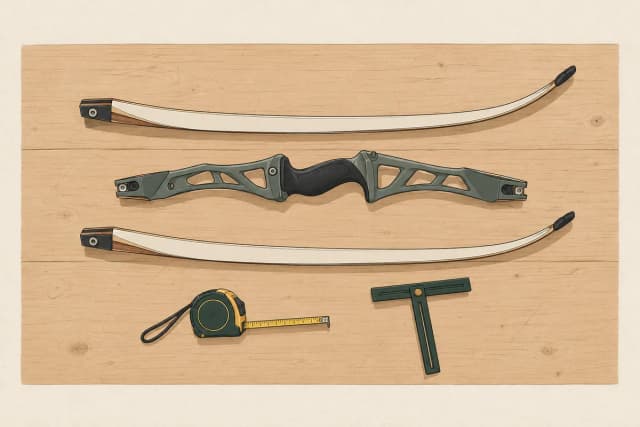
- My Sanlida Royal X8 After 2 Years: Why I’d Make It Your Second BowA 45 lb first bow ended day one after 3 shots. See how the Sanlida Royal X8 one-piece shoots at 25 and 50 yards, what held up over 2 years, why the bundled arrows failed, and the draw weight to order instead.
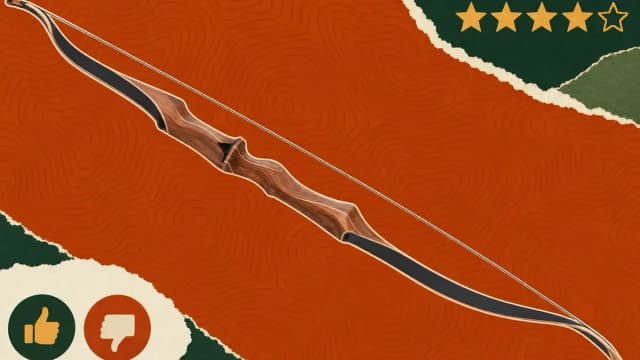
- The 5 Best Recurve Bows for Beginners, and Why I’d Start LighterBuy a first recurve too heavy and you fight it for months. These 5 picks, from the Samick Sage to a Hoyt ILF riser, come with checked specs, the length and draw weight that fit you, and what to look for before buying.
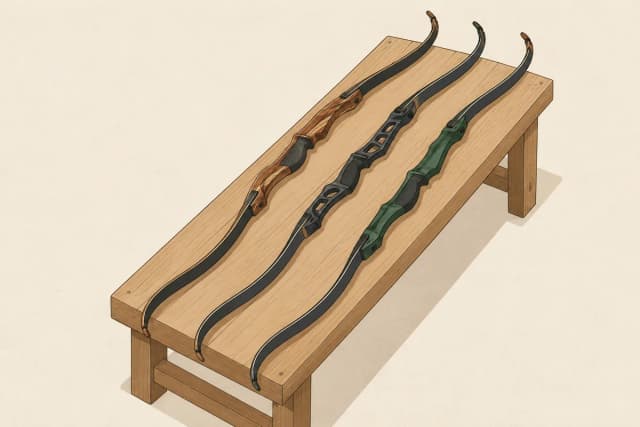
No longbow posts in Bows & Parts yet. Newsletter readers hear about new ones first.
No compound posts in Bows & Parts yet. Newsletter readers hear about new ones first.
// FAQ
Questions I get a lot
Short answers to what beginners ask me about bows & parts.
Recurve or compound for a first bow?
A takedown recurve. It’s cheaper, simpler and teaches form. A compound is easier to hold and aim, but start on the recurve.
What draw weight should a beginner use?
Most adults start between 20 and 30 lb on a recurve. You should be able to hold full draw for eight seconds without shaking.
What is a takedown bow?
A bow whose limbs come off the riser. You can travel with it and swap to heavier limbs later instead of buying a new bow.
Is a takedown recurve really better for beginners?
Yes. You can swap to heavier limbs as you get stronger instead of buying a whole new bow.
Can I buy a used bow?
Yes, but check the limbs for cracks or twist and ask for the original draw weight. Avoid anything stored strung for years.
What does ILF mean?
International Limb Fitting. It lets limbs from one brand fit another brand’s riser, so upgrades are easier.
How do I know my draw length?
Measure your arm span in inches and divide by 2.5. A pro shop can check it in a minute.
Left- or right-handed bow?
Go by your dominant eye, not your writing hand. Do the eye test before you buy.

// Free printable
Get the range log I actually use.
Seventeen printable pages: session log, score tracker, a 30-day drill challenge, a bow maintenance card, a first-season checklist and more. Join the monthly email and it lands right away.