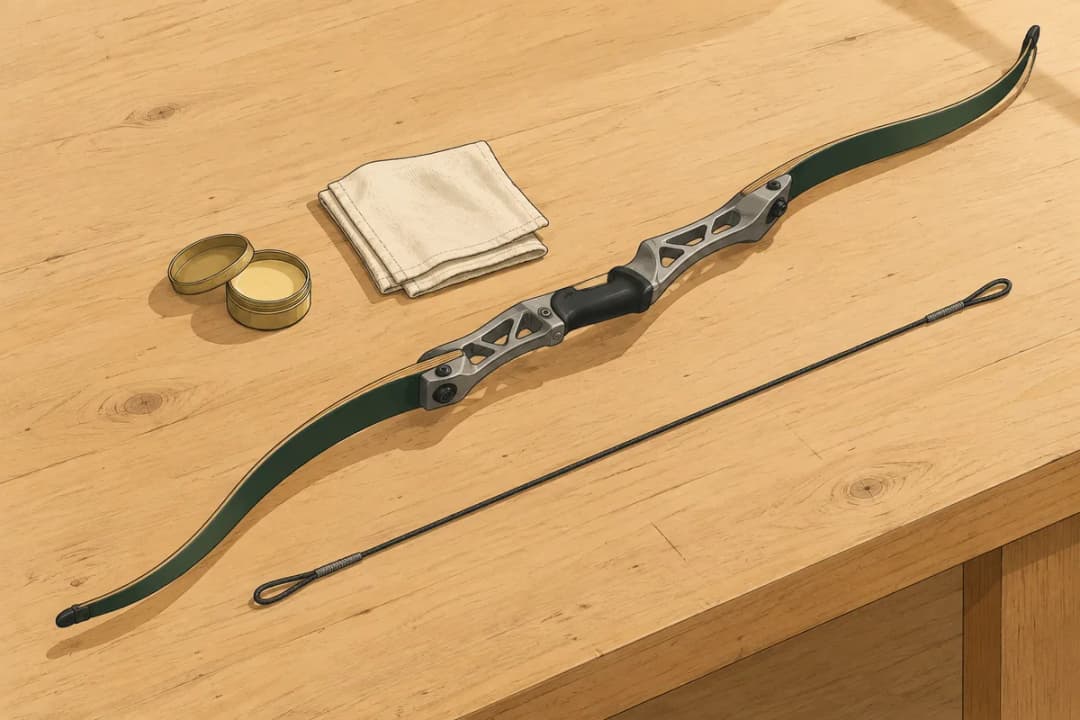


- Wax your bowstring when it looks dry, dull or fuzzy; regular shooters often wax every 2–3 weeks.
- Rub wax along the strands, work it in with your fingers, then wipe off the excess so the string isn’t sticky.
- Keep wax off the serving on recurves, longbows and compounds: it makes the wraps slip and unravel.
- A broken strand or fuzz that won’t lie down means it’s time to replace the string, not wax it.
Five minutes. That’s what stands between a pale, fuzzy bowstring and one that wears out early or fails on the shot. 😬
Rub string wax along the strands, work it in with your fingers, wipe off the excess and keep it off the serving. Do it every few weeks and your string stays smooth, quiet and safe for seasons. 🙂
Why waxing your bowstring makes it last longer
A bowstring is a bundle of thin synthetic strands that rub against each other on every shot. Wax fills the gaps between those strands, cutting down on fiber-on-fiber wear and holding the bundle together.
And it also helps keep water out. World Archery notes that top archers wax before a competition when rain is forecast, so a fresh coat is worth it before a wet day at the range or in the field.
This guide pulls together what World Archery, Lancaster Archery and string makers recommend. It works for recurves, longbows and compounds, with a note for crossbows futher down.

// Free printable
Get the range log I actually use.
Seventeen printable pages: session log, score tracker, a 30-day drill challenge, a bow maintenance card, a first-season checklist and more. Join the monthly email and it lands right away.
What you need to wax a bowstring
You don’t need much, and a stick of string wax lasts a long time. Use a wax made for bowstrings; World Archery recommends synthetic wax, though some traditional archers prefer beeswax.
- Bowstring wax: a stick or tube made for archery strings.
- Your fingers: the heat from rubbing helps the wax melt into the strands.
- A burnisher: a scrap of leather, a piece of cord or a bit of stiff card to spread the wax and remove excess.
- A clean cloth: to wipe off any leftover wax.
Most strings are made from one of a few material families and the same waxing method works for all of them.
| String material | What it is | Where you’ll see it |
|---|---|---|
| Dacron (e.g. Brownell B-50) | Polyester, with more stretch | Older recurves and bows without reinforced limb tips |
| Spectra / Fast Flight (e.g. BCY 652) | Low-stretch HMPE fiber | Many modern recurves |
| Dyneema (e.g. BCY 8125) | Thin, low-stretch HMPE fiber | Target recurves and compounds |
| Dyneema/Vectran blends (e.g. BCY 452X) | HMPE blended with Vectran for abrasion resistance | Compound strings and cables |
How to wax a bowstring in 5 steps
Do this with the bow strung so the strands are under tension. Set your string twists and brace height first, because World Archery points out that waxed strings are harder to adjust afterwards.
- Inspect the string. Look for broken strands, loose or separated serving and heavy fraying before you start.
- Rub on the wax. Run the wax up and down the string (and cables, on a compound) until you can see it on the strands, staying off the serving.
- Work it in with your fingers. Pinch the string and rub up and down quickly; the friction warms the wax so it melts into the gaps between strands.
- Burnish. Run a piece of leather, cord or card along the string to push the wax in and lift off the excess.
- Wipe and check. Wipe away leftover wax with a cloth: the string should look slightly darker and smooth, not sticky or clumpy.
That’s it. The whole job takes about five minutes, and it’s easy to fold into the end of a practice session.
The archery shop in the video, MerlinArchery, explains why step 3 is the one not to skip:
All you do is take your fingers and just rub it in… you’re heating that wax up with the friction from your fingers… you’re also conditioning the inside of the string.
That’s the difference between wax that protects and wax that just sits there. Rub until the string feels warm: wax that’s only smeared on the outside just flakes off.
How often to wax a bowstring
World Archery says most top archers wax every two to three weeks, plus before competing in rain. If you shoot once in a while, go by how the string looks and feels rather than the calendar.
Not everyone waxes on that schedule. The same shop’s advice is to wax more often:
I say you can’t wax a string enough, but you want to be waxing it at least once a week… if you’re shooting fairly regularly, it’s just going to drastically increase the lifespan of your bow string.
Both are fair: weekly suits someone shooting most days, every two to three weeks suits most shooters, and the table below beats either calendar. If the string looks dry or fuzzy, wax it, whatever the date.
| What you see or feel | What it means | What to do |
|---|---|---|
| Smooth, slightly tacky, slightly dark | Well waxed | Nothing yet |
| Dull, dry or lightly fuzzy | Wax has worn off | Wax it |
| Fuzzy right after waxing | Broken fibers, string is wearing out | Plan a replacement |
| Thick, sticky buildup that collects grit | Too much wax | Burnish and wipe off the excess |
| A broken strand | String is damaged | Stop shooting and replace it |
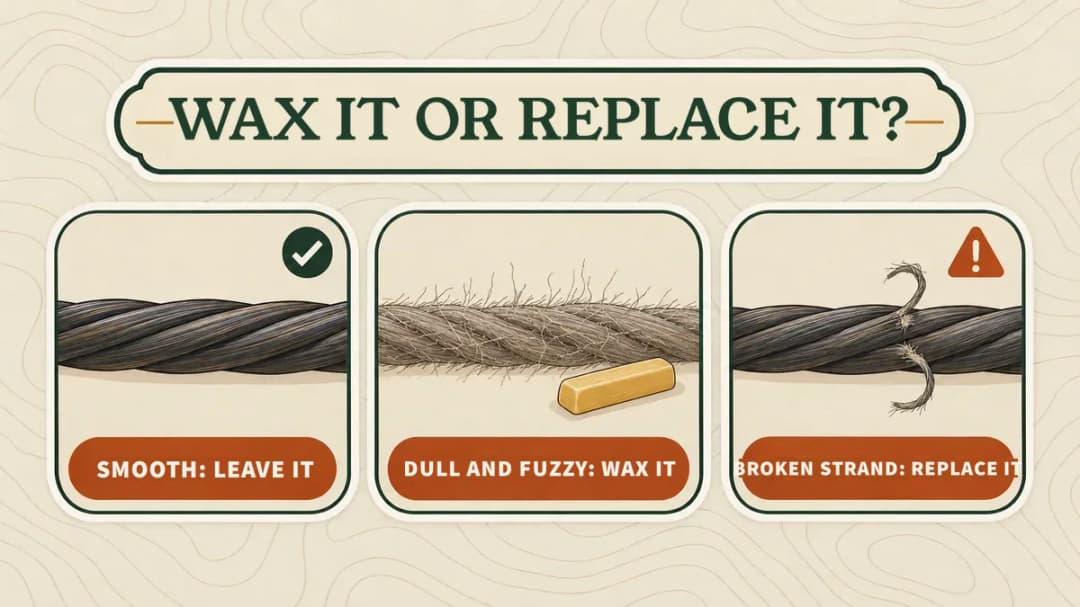
Check your string at the start of every session, not just when you wax it. It takes ten seconds and tells you when the next coat is due.
Keep wax off the serving (and other waxing mistakes)
The serving is the tightly wrapped thread at the center of the string (where the arrow nocks) and at each end loop. Wax works under the serving wraps and makes them slip, so they unravel sooner and get slippery under your fingers.
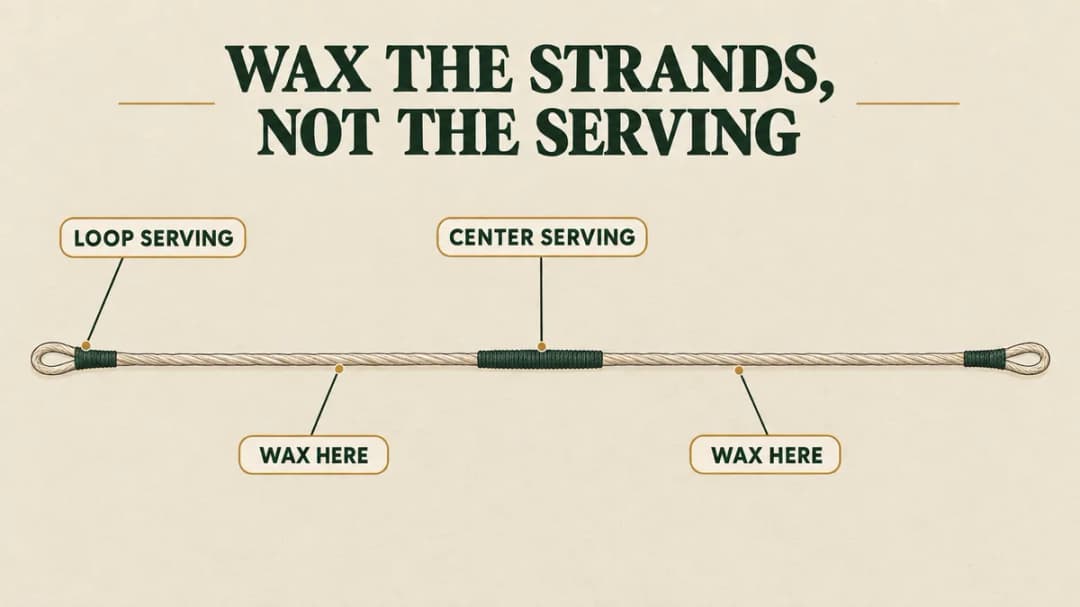
- Waxing the serving: wax only the bare strands between the servings.
- Too much wax: a thick coat sits on the outside, attracts grit and does nothing for the strands.
- Skipping the finger work: wax that isn’t worked in just flakes off.
- Waxing over damage: wax won’t repair a broken strand or a separated serving.
Waxing a crossbow string: follow your crossbow’s manual
Crossbow strings need wax too, but the rules differ by maker. TenPoint’s current maintenance guide says to wax the string and cables whenever they look fuzzy or feel dry, and to cover the center serving with its wax or Bohning Textite.
Other crossbow advice says to keep wax off the serving and use a rail lube there instead. Your manufacturer’s manual wins, because the center serving rides on the rail and trigger and each design is different.
When to replace a bowstring instead of waxing it
Wax keeps a good string good, but it can’t bring back a worn one. Replace the string when you see any of these signs.
- A broken strand anywhere, including under the center serving.
- Heavy fraying or fuzz that doesn’t lie down after waxing.
- Serving that separates or unwraps, which a shop can often re-serve.
- Stretch: you can’t keep the brace height in spec, even with twists.
- Age: a common rule of thumb is every two to three years, sooner if you shoot a lot.
If you’re new to bows and their parts, the archery glossary explains terms like brace height and serving. My recurve archery for beginners guide covers the rest of the basic care your bow needs.
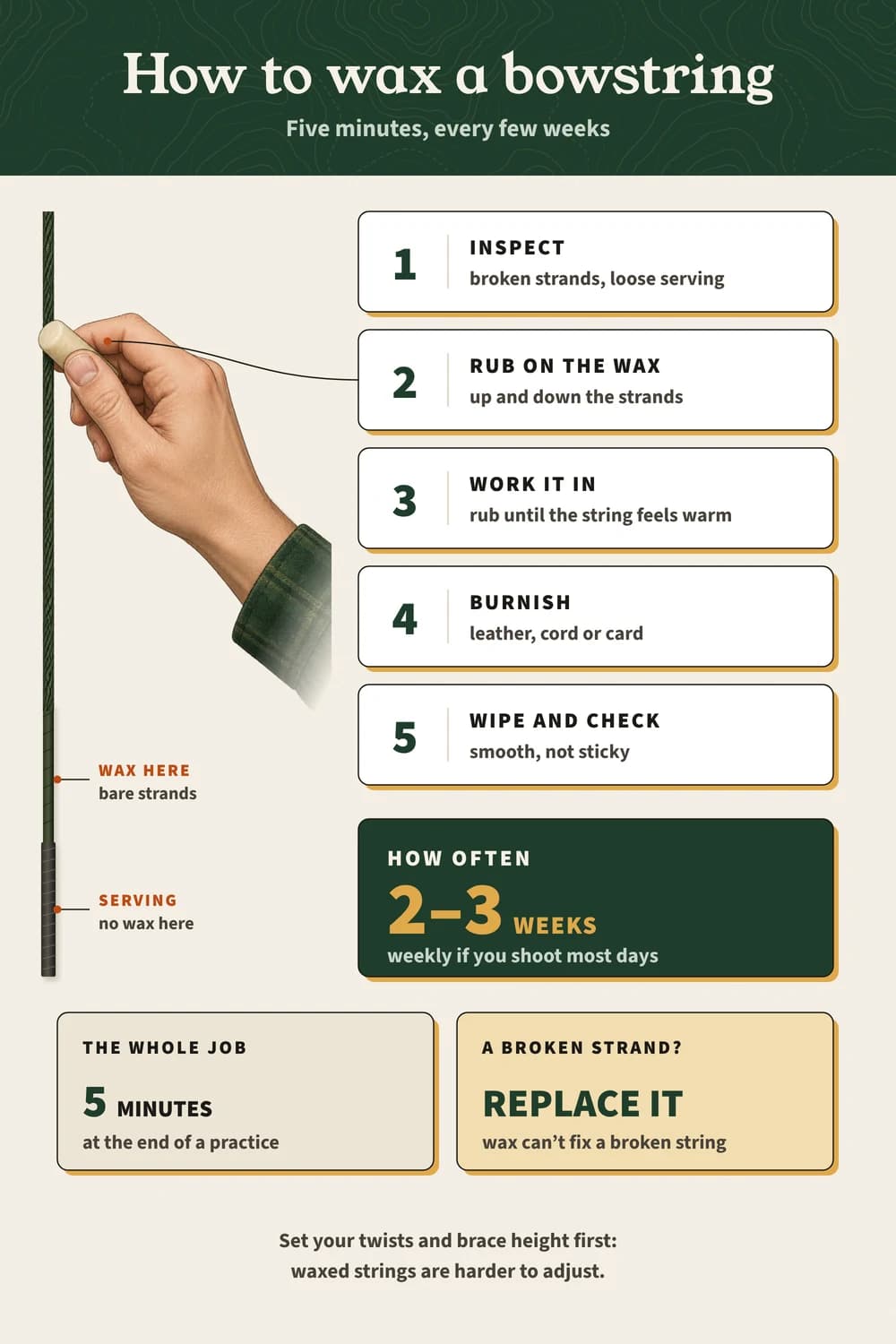
Here’s the whole job on one page, to keep with your bow case.
// FAQ
Frequently asked questions
Quick answers to the questions readers ask most.
How often should you wax a bowstring?
Every two to three weeks if you shoot regularly, or whenever the string looks dry, dull or fuzzy. Occasional shooters can go by the string’s condition.
Should you wax the serving on a bowstring?
Not on a recurve, longbow or compound: wax makes the serving slip and unravel. Some crossbow makers do say to wax the center serving, so follow your crossbow’s manual.
Can you over-wax a bowstring?
Yes. Extra wax sits on the outside, attracts dirt and can gum up, so burnish it in and wipe off what’s left.
What happens if you never wax a bowstring?
The strands dry out and rub against each other, so the string frays and wears out sooner. A badly worn string can break on the shot.
What kind of wax should I use on a bowstring?
A wax made for bowstrings. World Archery recommends synthetic string wax, and some traditional archers use beeswax.
How long does a bowstring last?
A common rule of thumb is two to three years, sooner with heavy shooting. Replace it right away if a strand breaks.

Final thoughts
Waxing a bowstring is the cheapest, quickest bit of bow care there is: wax, work it in, wipe it off, and keep it off the serving. A few minutes every couple of weeks keeps your string smooth and your shots consistent.
Check the string every time you shoot, and replace it at the first broken strand. Jot your waxing dates in my free range log so you never have to guess when it’s due.
