

- Total arrow weight is the number that matters: shaft (GPI × length) plus point, insert, nock and fletching, all in grains.
- Divide it by your draw weight for grains per pound (GPP), the number that tells you if an arrow is safe for your bow.
- On a traditional recurve or longbow, stay at 8 grains per pound or more; many compounds and target recurves allow 5.
- Never go under your bow maker’s minimum: a too-light arrow stresses the bow like a partial dry fire.
- Tune weight with the point first, and remember a heavier point makes the arrow act weaker in spine.
8.3 GPI, 100 grain points, 400 grain total: three numbers on one listing, and only one of them decides whether that arrow is safe in your bow. 🤨
It’s the total: add every part, divide by your draw weight, and stay at 8 or more on a traditional bow. The arrow weight builder does the sum for you.
How arrow weight adds up: grains, GPI and total weight
Arrows are weighed in grains, a tiny unit: 7,000 grains make a pound, so a 100-grain field point is less than a quarter of an ounce. One gram is about 15.4 grains.
Shafts are sold by GPI, grains per inch: the bare shaft’s weight for each inch, with nothing on it. Light shafts run about 5–6 GPI, mid-weight 7–9 and heavy 10 or more, and shaft weight is GPI × your cut length.
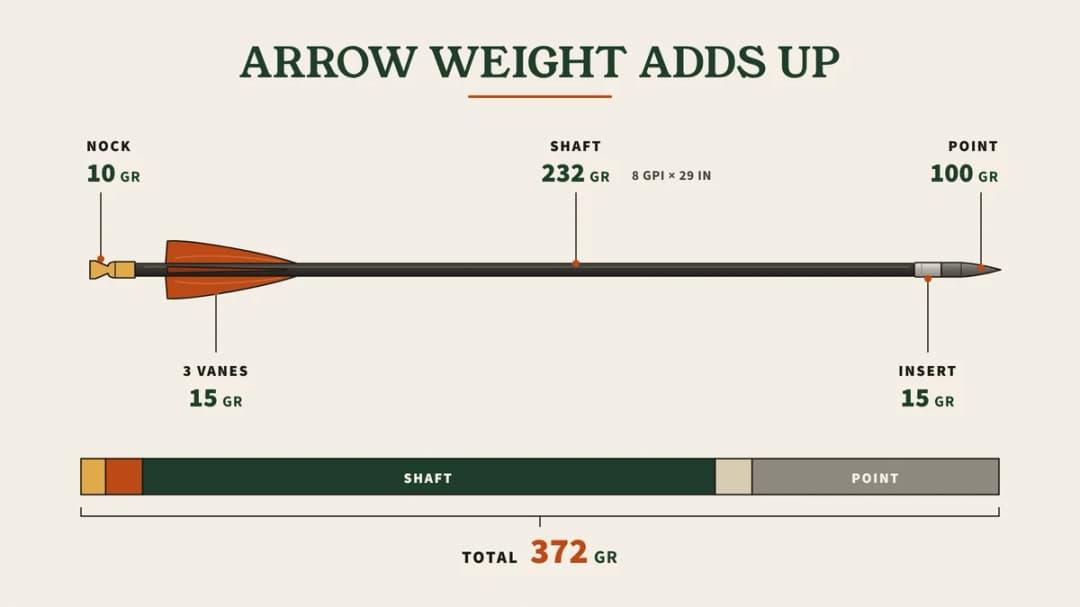
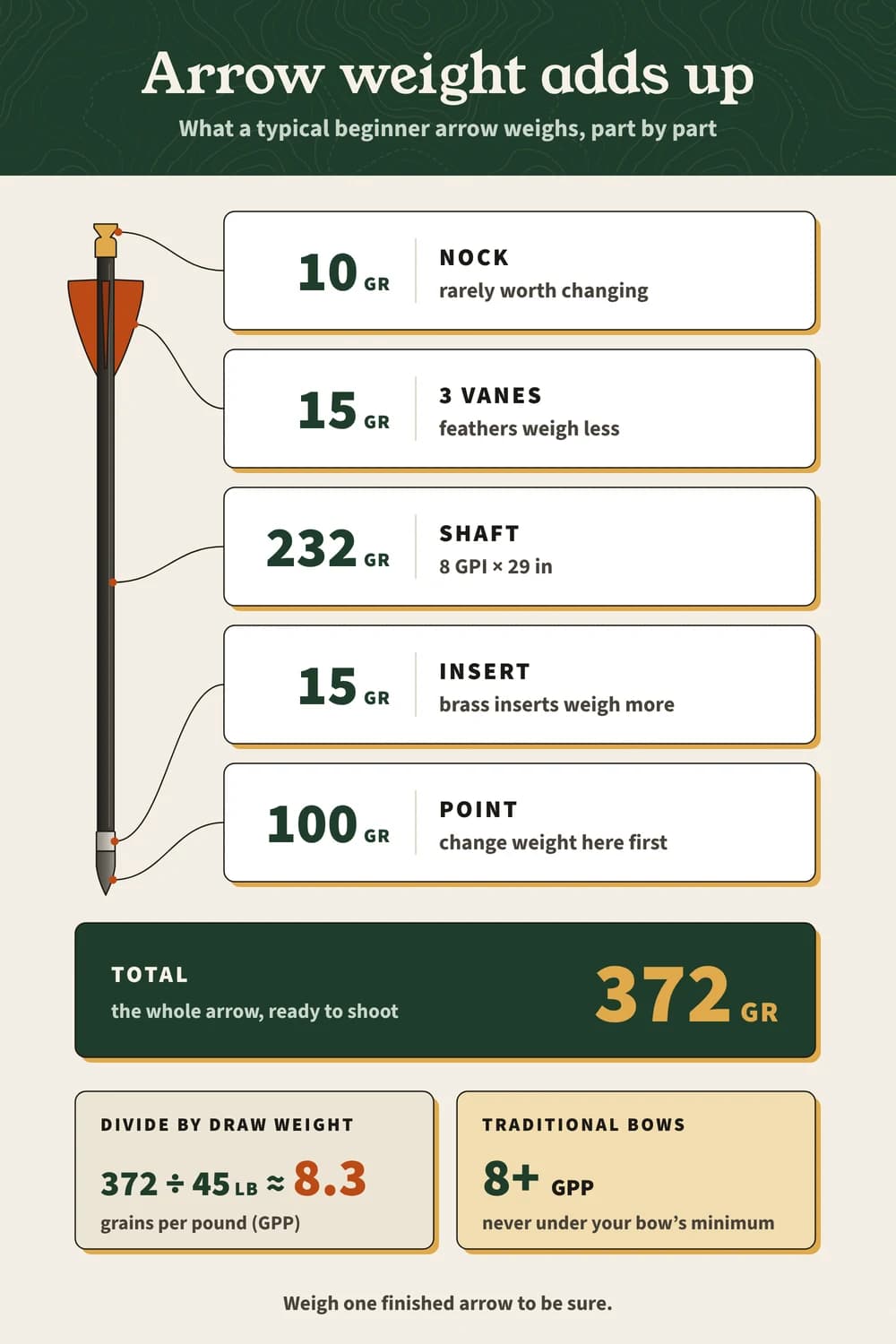
Then add every part fixed to the shaft. Here’s an example arrow with typical part weights, check your own packaging or weigh them. The shaft and the point make up most of the total.
| Part | Example weight | How to change it |
|---|---|---|
| Shaft (8 GPI × 29 in) | 232 grains | A lighter or heavier GPI, or a shorter cut |
| Point | 100 grains | Screw-in points come in 75, 100, 125 and more |
| Insert | 15 grains | Brass or weighted inserts add more |
| Three vanes | 15 grains | Feathers are lighter than vanes |
| Nock | 10 grains | Rarely worth changing |
| Total | 372 grains | Weigh the finished arrow to be sure |
How heavy your arrow should be: grains per pound by bow type
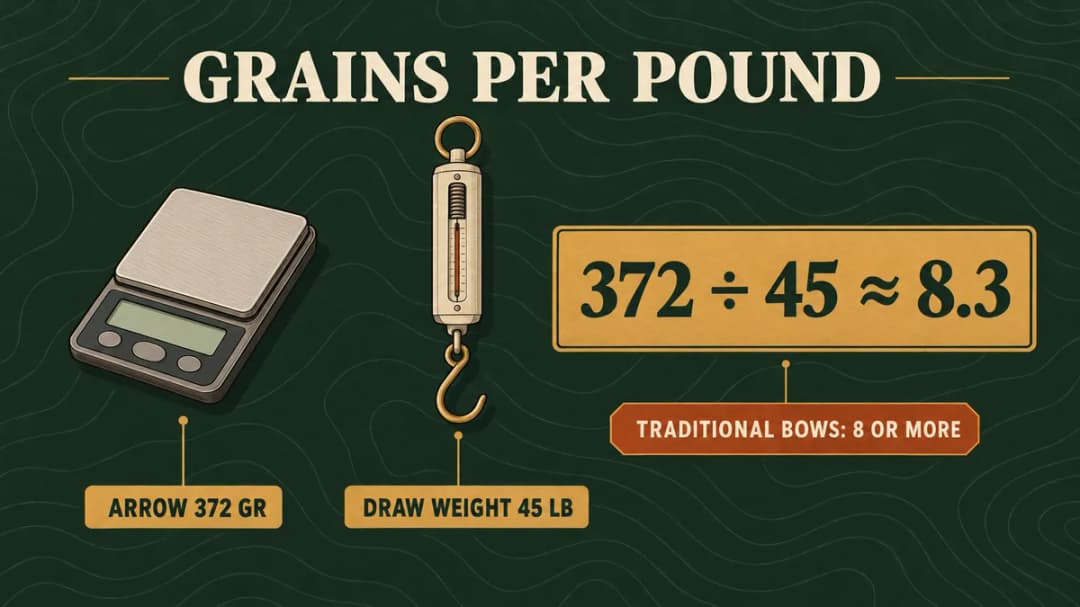
Grains per pound compares the arrow with the bow: total arrow weight divided by your draw weight. A 372-grain arrow from a 45 lb bow is 372 ÷ 45 ≈ 8.3 grains per pound.
JJ at Bob Lee Bows, a traditional bow maker, puts the mix-up most beginners make in plain words:
The term that is most commonly used incorrectly is GPI. That does not mean grains per pound, which is what GPP is. GPP, grains per pound, is the most important number that you can have for your bow.
I agree, because GPI only tells you about the the shaft. GPP is the number your bow cares about, and every maker’s minimum is written in it.
| Bow | Usual minimum | A sensible range |
|---|---|---|
| Traditional recurve or longbow | 8 grains per pound (many makers and shops) | 8–10 grains per pound |
| Olympic-style target recurve | 5 grains per pound (Hoyt’s manual, for example) | The maker’s chart, never under 5 |
| Compound | Usually 5 grains per pound (Browning’s manual, for example) | 6–8 grains per pound, heavier for hunting |
| Crossbow | A minimum bolt weight in grains, in the manual | At or above the maker’s number |
The bow’s own manual always wins. On a traditional bow, I’d stay at 8 or more even if a chart says less, and JJ goes further:
From what I found, you don’t want to shoot any arrow out of, in my opinion, any recurve less than eight grains per pound. If you go any less than eight grains per pound… you’re putting a lot more stress on your bow than what you really need to be putting on it.
The catch: that number is for traditional recurves. Olympic-style risers and limbs are built for lighter target arrows, and their makers say so in the manual, so check yours before you go light.
How to choose your arrow weight in 5 steps
Pick the weight before you buy the arrows. Not after. Start from your real draw weight, because the number on the limbs is measured at a 28″ draw and yours may differ.
- Know your real draw weight: have a shop weigh it at your draw length, or use the draw weight calculator for an estimate.
- Find your floor: draw weight × 8 on a traditional bow (or × your manual’s number). A 45 lb bow needs at least 360 grains.
- Choose the shaft from the maker’s spine chart first, then check its GPI × your length.
- Make up the rest with the point: 100 and 125 grains are the common choices for practice.
- Weigh one finished arrow on a grain scale, and check it lands above your floor.
JJ walks through the same sum in the video:
If you have a 400 grain arrow, weighs four hundred grains, everything put together, field point, feathers, all of it, and you are shooting a 50-pound bow, well, if you divide 400 by 50, that means you’re shooting eight grains per pound.
That’s the whole check. “Everything put together” is the part to remember: the point alone can be a quarter of the total, so a listing’s shaft weight is never the answer.
Light vs heavy arrows: what changes when you add grains
Above the safe floor, arrow weight is a trade. Lighter arrows fly faster and flatter; heavier arrows are quieter and carry more momentum.
- Lighter: faster and flatter over distance, but louder and harder on the bow.
- Heavier: slower with more drop, but quieter, more forgiving and better at holding their energy.
- Heavier point: makes the same shaft act weaker in spine and moves the balance forward (check it with the FOC calculator).
I shoot 100-grain field points, and for practice that’s where I’d start too. A middle-of-the-road arrow, a little above your floor, is the easiest place to learn; change weight once your form is steady and you know what you want from it.
Here’s the whole arrow-weight check on one page, to save for the next time you buy arrows.
// FAQ
Frequently asked questions
Quick answers to the questions readers ask most.
How many grains are in a pound?
7,000. One grain is about 0.065 grams.
What does GPI mean on arrows?
Grains per inch: the weight of the bare shaft for each inch of its length. Multiply it by the shaft length for the shaft’s weight.
How heavy should my arrow be?
At least your bow maker’s minimum, written in grains per pound of draw weight. On a traditional recurve or longbow, stay at 8 grains per pound or more.
Does a heavier point change my spine?
Yes. A heavier point makes the arrow act weaker, so a big jump in point weight can mean you need a stiffer shaft.
Do crossbow bolts use grains too?
Yes. Crossbow makers list a minimum bolt weight in grains in the manual, and you should never shoot a lighter bolt.

Final thoughts
Grains look confusing until you only watch one number. Add up the whole arrow, divide by your draw weight, and stay above your bow’s floor.
Note your arrow weight in the free range log, so when you change points or shafts you can see what it did to your groups.