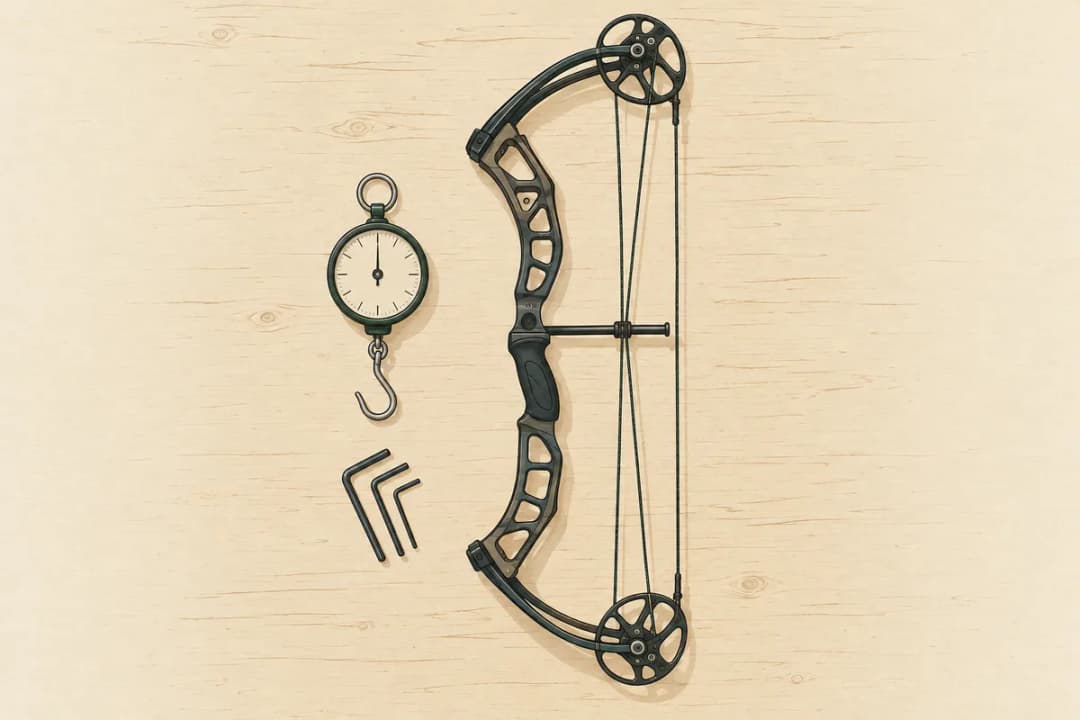


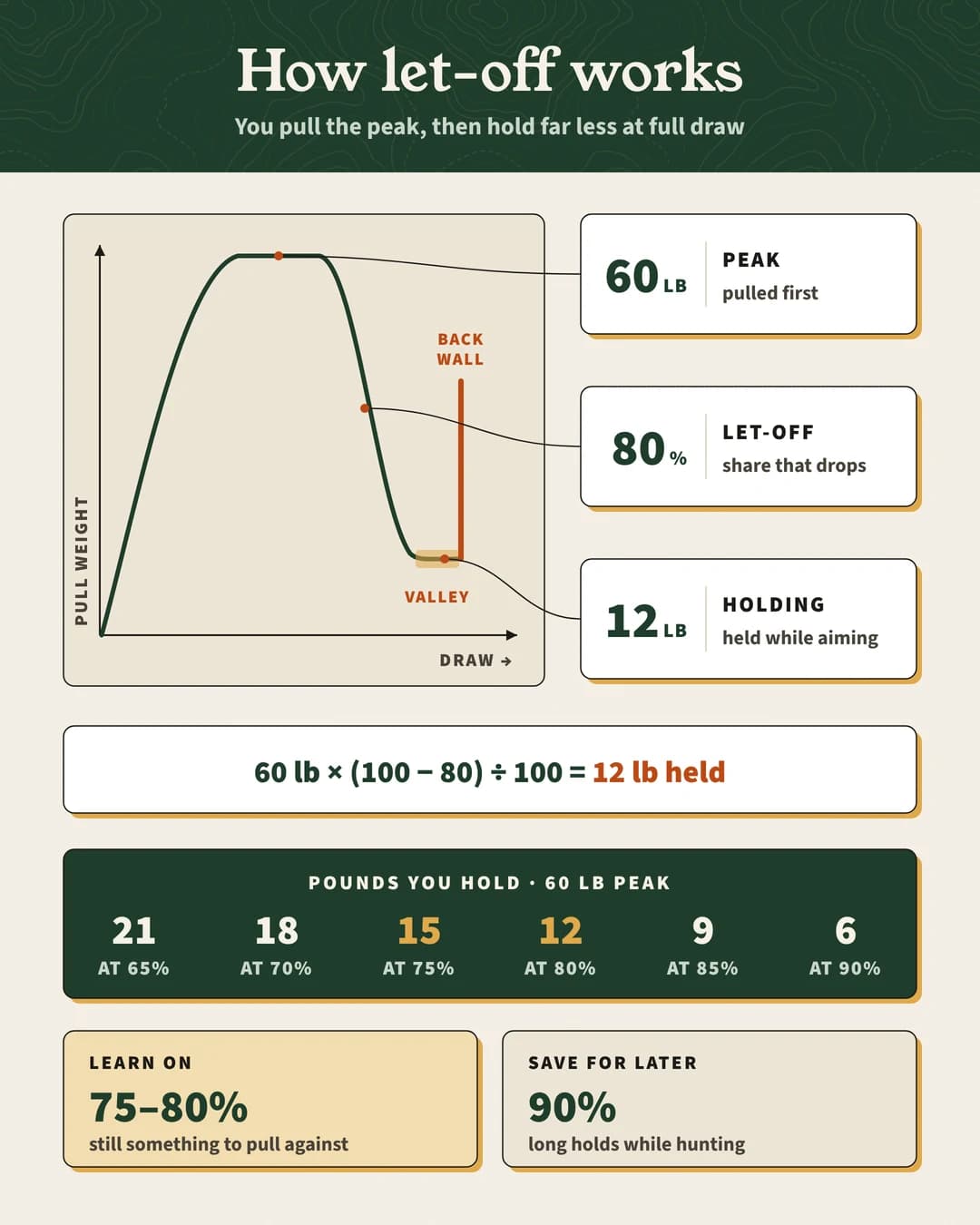
- At 80% let-off, a 60 lb compound holds at 12 lb; at 90%, just 6 lb.
- More let-off is easier to hold, not easier to shoot well: its one real job is long holds while hunting.
- To learn on, pick a bow around 75–80% let-off, not 90%.
- Changing let-off with a module or draw stop can change your draw length too, so check it.
90% let-off sounds better than 65%. It isn’t, at least not for learning. 🤨
Let-off is the share of peak weight that drops away at full draw, and more let-off makes a bow easier to hold, not easier to shoot well. Pick a mid-range let-off around 75–80% while you learn (new to compounds? start with how a compound bow works). Here’s how to read the number and choose.
How let-off works: peak weight and holding weight
A compound’s draw weight isn’t steady. It climbs to a peak weight partway through the draw, then the cams roll over and the weight drops away.
Let-off is that drop, as a percentage of the peak. What’s left is your holding weight: what your back and your release hand carry while you aim.
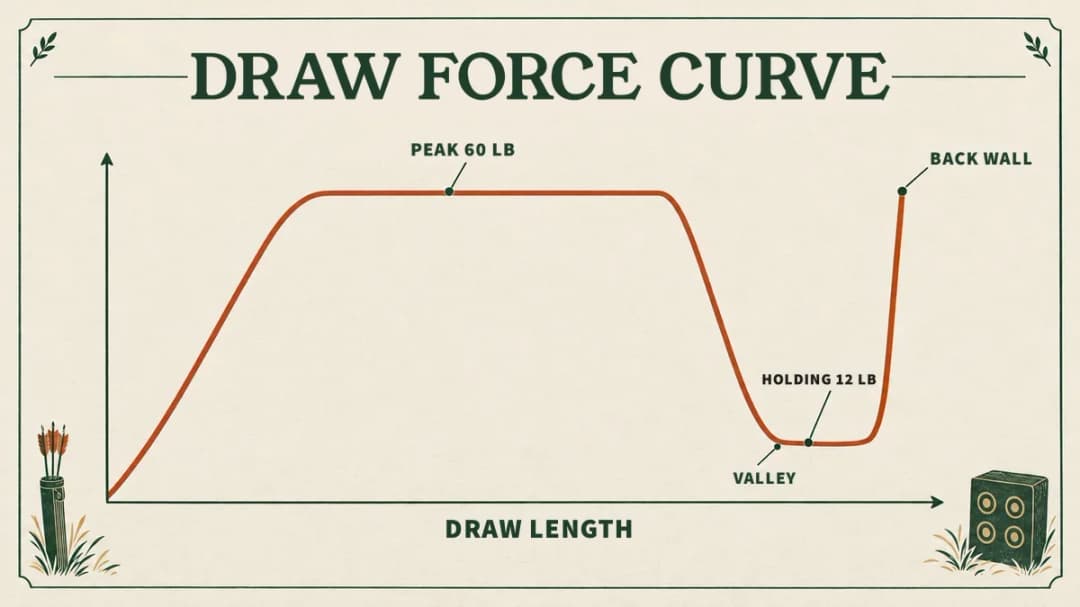
The math is simple: holding weight = peak weight × (100 − let-off) ÷ 100. A 60 lb bow at 80% holds at 12 lb, and a 50 lb bow at 80% holds at 10 lb.
| Let-off | You hold (60 lb peak) | Where you see it |
|---|---|---|
| 65% | 21 lb | Some target archers, who like weight to hold against |
| 70–75% | 15–18 lb | Most target bows |
| 80% | 12 lb | Common on modern bows; a good place to learn |
| 85% | 9 lb | Many hunting bows, as they come from the factory |
| 90% | 6 lb | High let-off hunting bows, for long holds |
The valley and the back wall: what you feel at full draw
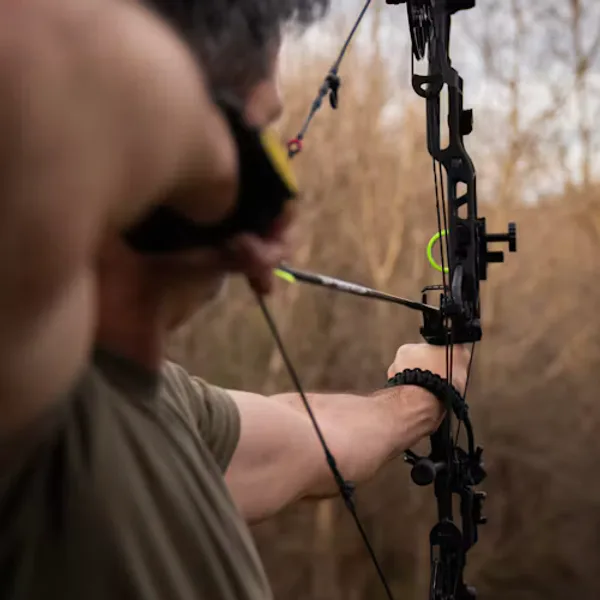
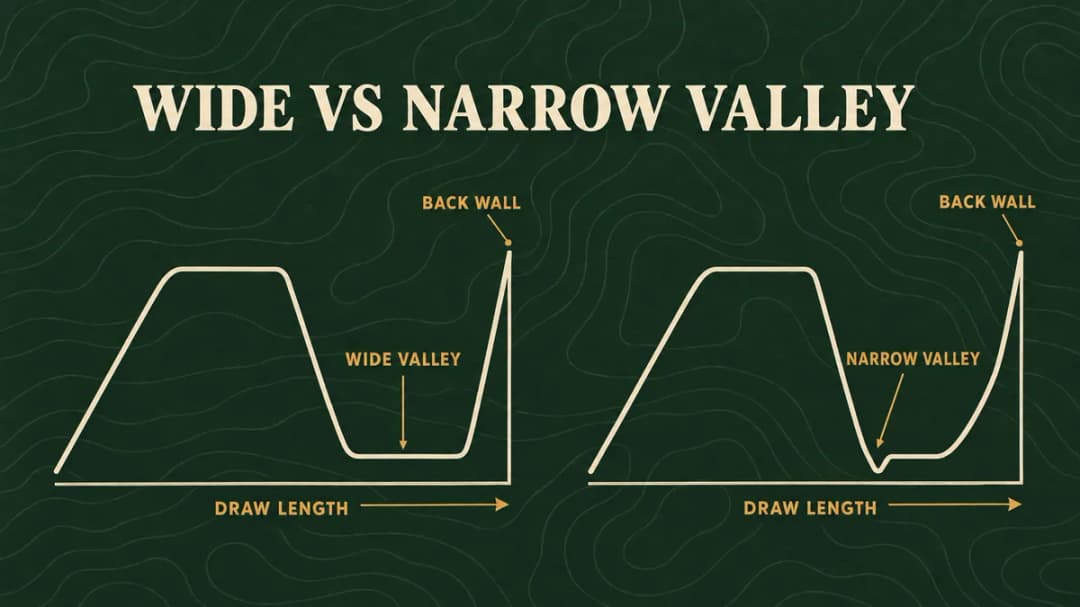
Two more words come with let-off. The valley is the low-weight zone at full draw, and the back wall is the hard stop behind it, where the cams won’t turn any further.
- Wide valley: the weight stays low over a longer stretch, so the bow forgives a little creep forward.
- Narrow valley: creep forward a little and the bow pulls you toward peak weight; common on fast, aggressive cams.
- Solid back wall: a firm stop you can pull into, in the same spot every shot.
How to choose let-off: why 75–80% is the place to learn
Here’s my stance: skip the 90% bows while you learn, and pick one around 75–80%. I haven’t shot a compound yet, so this is an opinion from research, but the people who shoot them for a living back it up.
The compound archer behind the Inside Out Precision channel shoots an 85% hunting bow and a roughly 70% target bow. He’s blunt about what the high number is for:
In my opinion that’s really the only benefit to a really high let-off cam: being able to stay at full draw.
Matches what I’d tell a new archer. Holding a deer at full draw behind a tree is a hunter’s problem, not a learner’s, and you give up something real to solve it early.
What you give up is feedback. Here’s why he picks lower let-off for target shooting:
I like the lower let-off for target, to me it’s a lot more responsive… I want that feedback as a target shooter. I want to know if I’m getting lazy in my shot execution.
That’s the strongest reason to learn on mid-range let-off. A bow that pushes back when you ease off tells you your shot is breaking down; a 90% bow lets you get lazy without a word.
- You need something to pull against. A clean shot comes from pulling steadily into the back wall; with only a few pounds left, it’s easy to stop pulling and just aim.
- Narrow valleys punish creep. Fast, high let-off cams often have the narrowest valleys.
- Target archers often choose less. Most shoot around 70–75%, and some go down to 65%, because more weight at full draw steadies the hold.
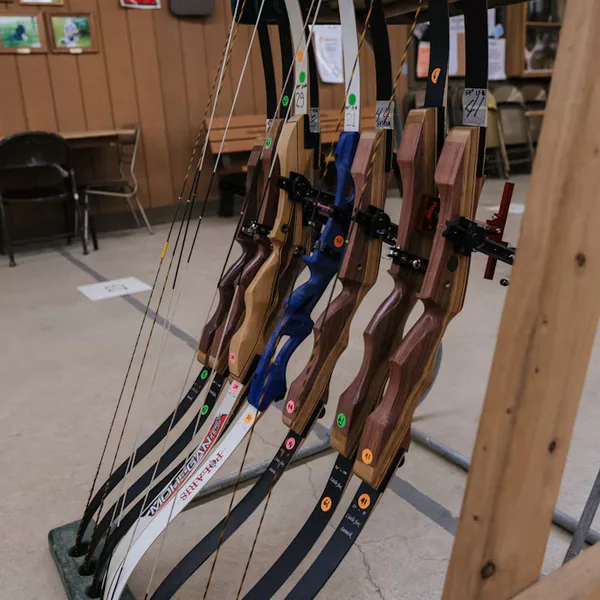
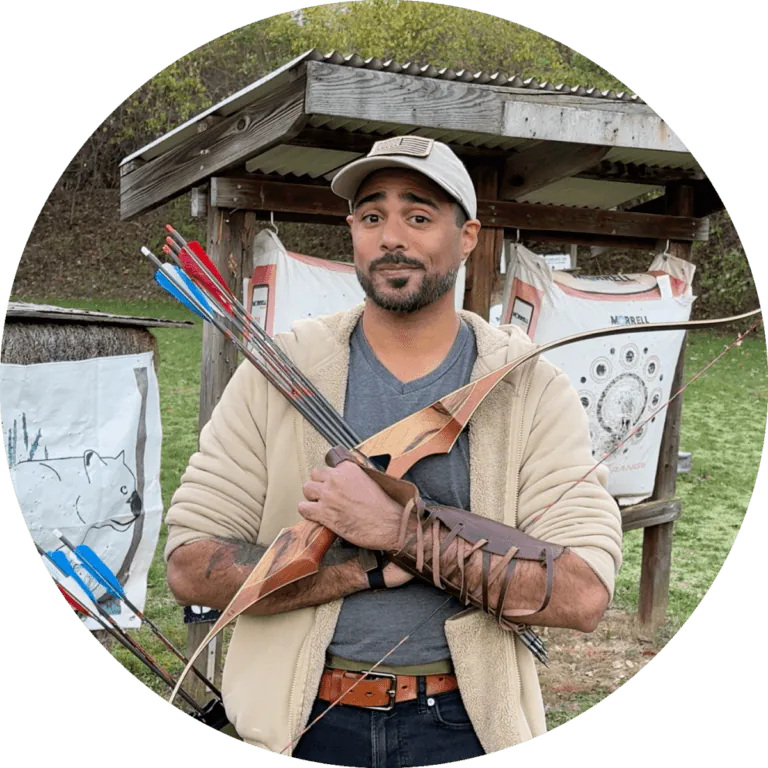
Let-off is also why a compound feels so diffrent from a recurve at anchor, where you hold the full weight. The first time I pulled my 45 lb recurve, I held all 45 lb, and I didn’t last long:
The first time I tried to pull the 45 pounder, I could not do it, and I only got maybe three shots in before I was like, I’m done.
At 80% let-off, a 45 lb compound would ask for 9 lb at full draw. But you still pull the full peak on every shot, so buy the peak weight lighter than you think, whatever the let-off.
 From Jedain
// Free printable
Get the range log I actually use.
Seventeen printable pages: session log, score tracker, a 30-day drill challenge, a bow maintenance card, a first-season checklist and more. Join the monthly email and it lands right away.
Changing let-off: modules, draw stops and the rules
Many cams let you change let-off with a module or a draw-stop setting, often somewhere between 65% and 90%. Do it with the bow’s manual open or let a pro shop do it, because one catch is easy to miss:
If you’re gonna switch these out, you want to make sure that it’s not going to change your draw length.
On some bows a lower let-off module adds about half an inch of draw, so you drop a module size to stay put. Check your draw length after any let-off change, before you judge how the bow shoots.
Hunting rules can cap let-off too. A few states limit it for hunting: Colorado’s limit was 80% when its wildlife commission kept it in 2022, and the agency counted four states with a cap. Check your state’s current regulations before you hunt.
Here’s let-off on one page, with the holding weight for every common setting on a 60 lb bow.
// FAQ
Frequently asked questions
Quick answers to the questions readers ask most.
What is a good let-off for a beginner?
Around 75–80%. It holds easily and still gives you weight to pull against while you build a clean shot.
Is 90% let-off too much?
Not for a hunter who holds at full draw for a long time. It’s a poor bow to learn form on, though: little to pull against and often a narrow valley.
Does let-off change the draw weight?
No. The peak weight stays the same; let-off only lowers what you hold at full draw.
How do I work out my holding weight?
Multiply the peak weight by (100 − let-off) and divide by 100. A 70 lb bow at 80% holds at 14 lb.
Do recurves have let-off?
No. A recurve gets heavier the farther you draw it, so you hold the full weight at anchor; the recurve buying guide shows how to pick that weight.
Final thoughts
Let-off is a comfort feature, not a skill. Pick a mid-range let-off, pull into the back wall and let your form do the rest.
Note your bow’s let-off and your groups in the free range log, so you can see what any change does.