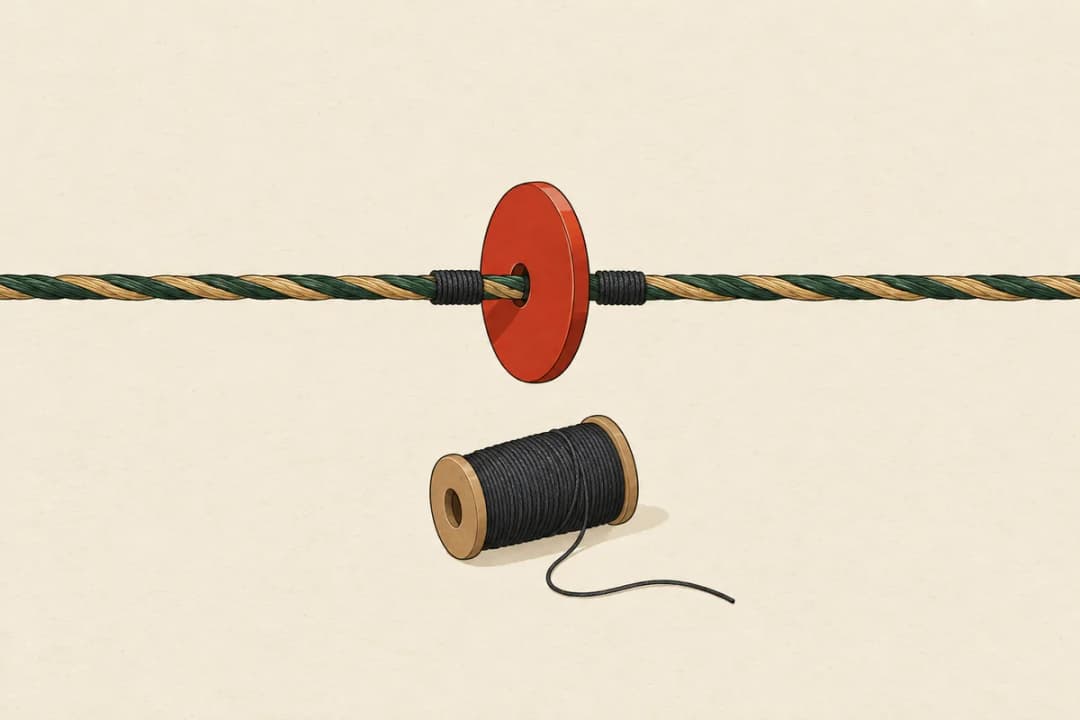


- A kisser button is a second touch point on your face at full draw: it checks your anchor, it can’t build one.
- Build a repeatable anchor first, then add a kisser only if you want a second check.
- Pick a small one, like a brass nock set, over a big plastic disc you’ll fiddle with.
- Fit it in 4 steps where your anchor already puts the string, and never move your head to find it.
“Get a kisser button,” someone at the range says, after your arrows land high, then low, then high again. Tempting. 🤨
But a kisser checks your anchor, it can’t build one. Get a repeatable anchor point first and add the kisser later, if at all; you’ll see when it helps, which one to buy and how to fit it in four steps.
How a kisser button works at full draw
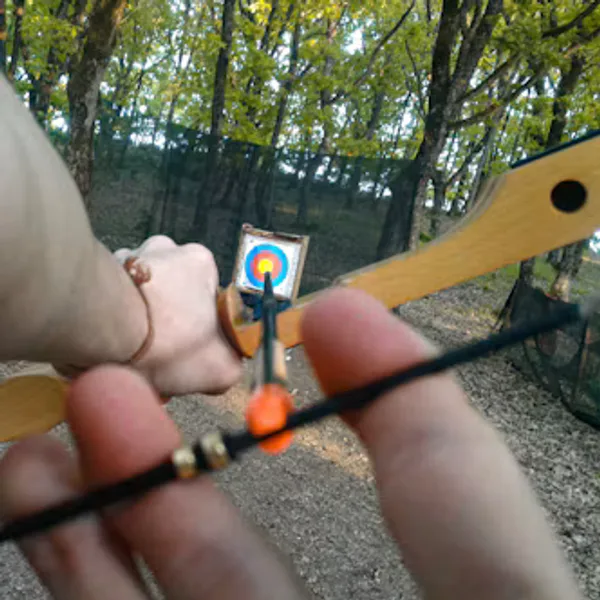
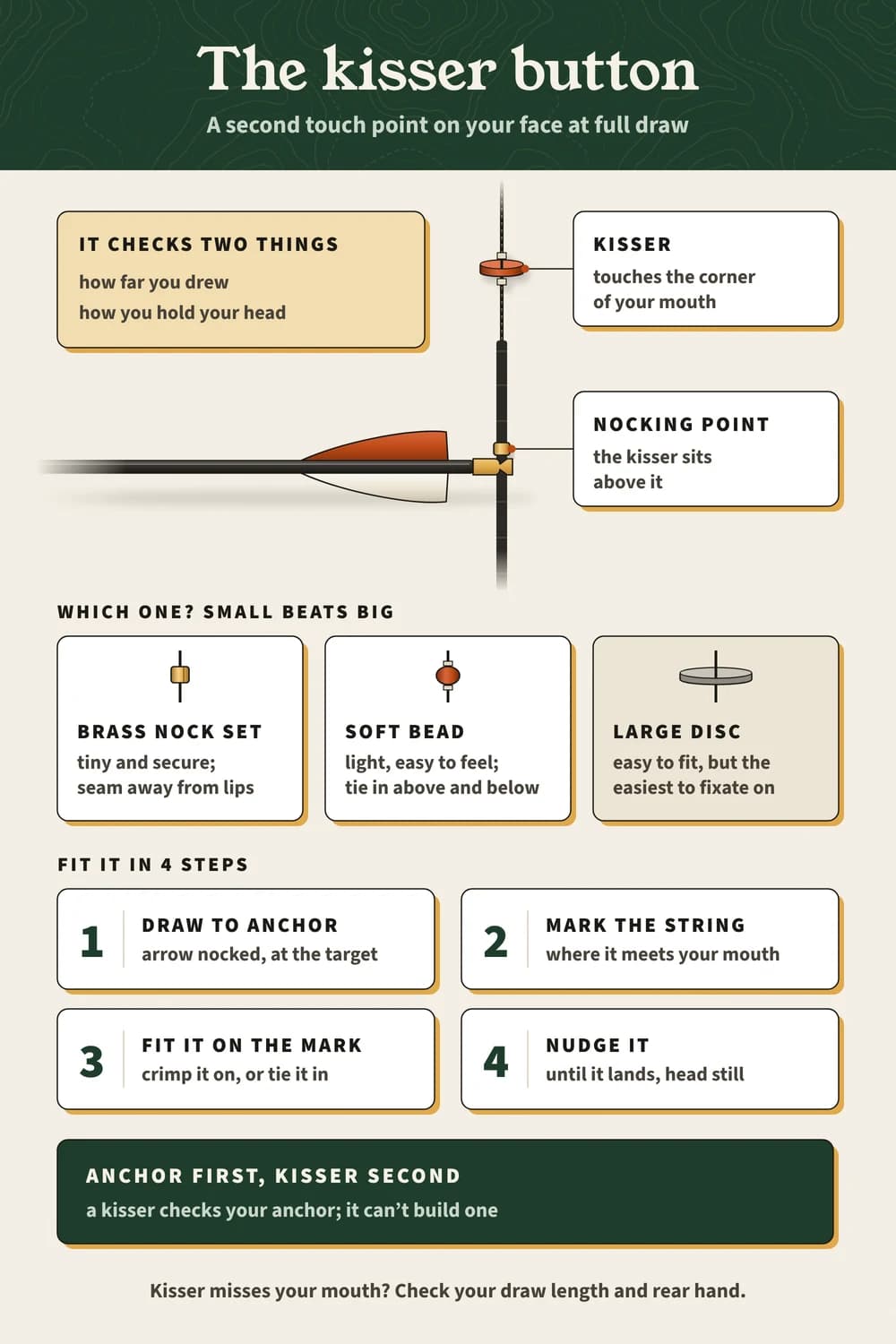
A kisser button is a small disc or bead fixed on the string above the nocking point. At full draw it touches the same spot on your face, usually the corner of your mouth, sometimes your lips or nose.
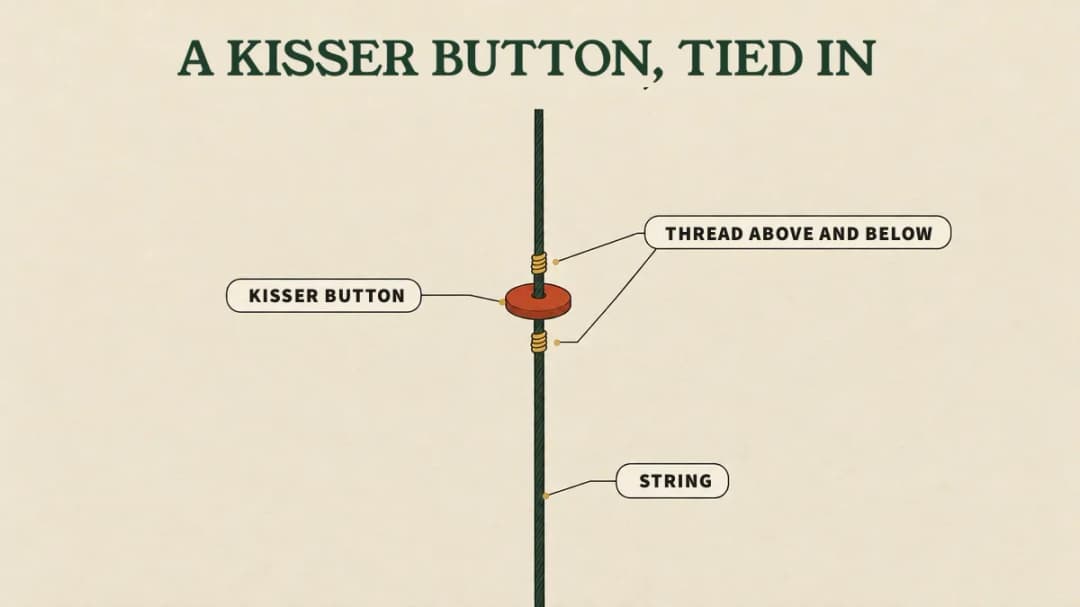
So that gives you a second touch point to go with your anchor. It checks how far you drew and how you hold your head, which is what keeps arrows from going high and low.
- Target archers with a sight: a common second reference, alongside the anchor under the chin.
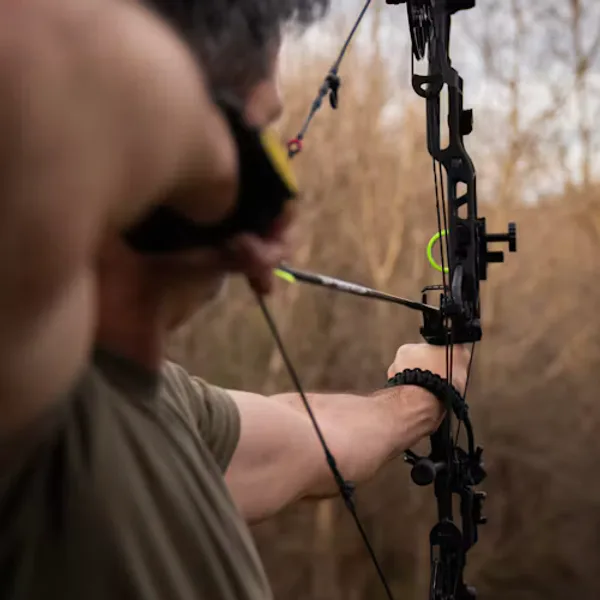
- Compound archers: a kisser at the corner of the mouth backs up the peep sight.
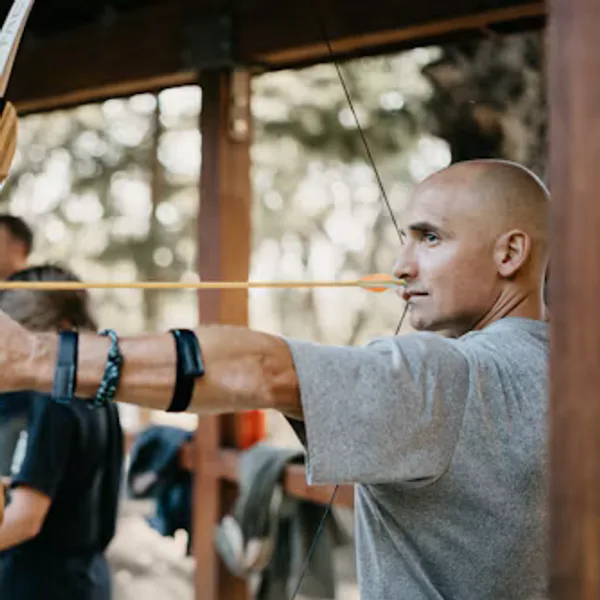
- Barebow and traditional archers: many skip it, because the anchor on the face already does the job.
 From Jedain
// Free printable
Get the range log I actually use.
Seventeen printable pages: session log, score tracker, a 30-day drill challenge, a bow maintenance card, a first-season checklist and more. Join the monthly email and it lands right away.
Do you need a kisser button? Build the anchor first
My stance: skip the kisser while you learn and build a solid anchor instead. A kisser only confirms an anchor you already have; if your hand lands somewhere new each shot the button just touches somewhere new too.
Not every coach sees it that way. The compound archer behind the Inside Out Precision channel, whose video is further down, thinks beginners gain the most from one:
For people that are beginning shooters I think a kisser button can really be a lot of help, it’s just one more reference point to make sure that you’re getting your head and your hand aligned the same way every time.
I see his point, and a second reference does help once there’s something to check. But the first fix is pulling to the same anchor every shot, and I made exactly that mistake for too long:
A mistake I made a lot before noticing it was that I was supposed to pull all the way to my cheekbone and I wasn’t doing that.
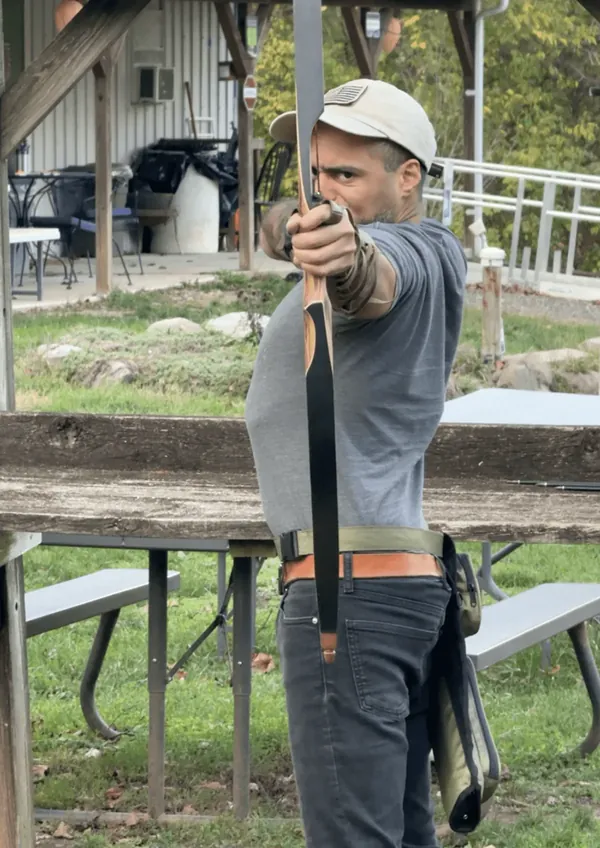
No button would have fixed that. What fixed it was pulling all the way to one anchor, my thumb knuckle to my cheek, every shot.
| What you compare | Anchor point | Kisser button |
|---|---|---|
| What it is | Where your hand touches your face | A disc or bead on the string that touches your face |
| Gear needed | None | The kisser, plus serving thread or nock pliers |
| What it checks | Draw length and hand position | Draw length and head position, as a second point |
| Works on its own? | Yes | No: it needs a repeatable anchor |
| Who needs it | Every archer, from the first arrow | Archers with a settled anchor who want a second check |
Which kisser to buy: small beats big
Kissers come as big plastic discs, soft rubber bead’s and plain brass nock sets crimped on as a kisser. Buy a small one: you still feel it at the corner of your mouth, and it adds almost nothing to the string.
The same archer explains the catch with the big discs, and it’s one I’d watch for in any new archer:
A lot of times what I see is people get so fixated on that kisser button that they sit there and they fiddle around with their anchor point for four or five seconds before they ever shoot.
That’s the trap. Come to anchor once, feel the kisser, and shoot; if you’re hunting for it every time, it’s too big or in the wrong place.
- Brass nock set: tiny and secure once crimped; turn the seam away from your lips so it can’t rub a sore spot.
- Soft bead or small disc: light and easy to feel; tie it in above and below so it can’t creep.
- Large slotted disc: easy to fit without unstringing, but the easiest to fixate on.
How to fit a kisser button in 4 steps
Once your anchor is repeatable, fitting one takes a few minutes. Set the kisser where your face already is, not the other way round.
- Draw to your normal anchor with an arrow nocked, head upright, the bow pointed at the target.
- Have a friend mark the string where it touches the corner of your mouth.
- Fit the kisser on the mark: crimp a brass nock set with nock pliers, or tie a bead or disc in with serving thread above and below it.
- Shoot a few ends and nudge it up or down until it lands without you moving your head.
When the kisser won’t reach your mouth: what it’s telling you
A kisser that lands in the wrong place is useful information. Don’t chase it with your face; find out why it moved.
If you draw back and that string is not contacting the corner of your mouth, then it’s either a draw length issue or a rear anchor position issue with your rear hand.
That’s the best use of a kisser I know of. On a recurve it usually means you drew short or your hand sat high, and on a compound it can mean the draw length is set wrong, so check those before you move the button.
If you do add a kisser later, this page has the sizes, the fitting steps and the one rule to keep.
// FAQ
Frequently asked questions
Quick answers to the questions readers ask most.
What is a kisser button used for?
It gives you a second touch point at full draw. If it lands in its usual spot, you know you drew the same length with your head in the same place.
Where should a kisser button touch?
Most archers set it at the corner of the mouth; some prefer the lips or the nose. Put it wherever your normal anchor already brings the string.
Can I use a brass nock set as a kisser?
Yes. Crimp it on with nock pliers, seam turned away from your lips. It’s small, light and stays put.
Can you use a kisser button with a peep sight?
Yes, and many compound archers do. The peep lines up your eye; the kisser confirms your anchor.
Why does my kisser button keep sliding?
It isn’t tied tightly enough. Tie it in firmly above and below with serving thread, so it can’t creep along the string; the nocking point guide covers tied and crimped nock sets.
Final thoughts
A kisser button is a useful check, not a fix. Build the anchor first, then add a small kisser if you want a second opinion on every shot.
Note your anchor and your high and low misses in the free range log, and you’ll see when it’s settled enough for a kisser.
A kisser checks an anchor; it doesn’t make one. Build yours first with the anchor point drill.