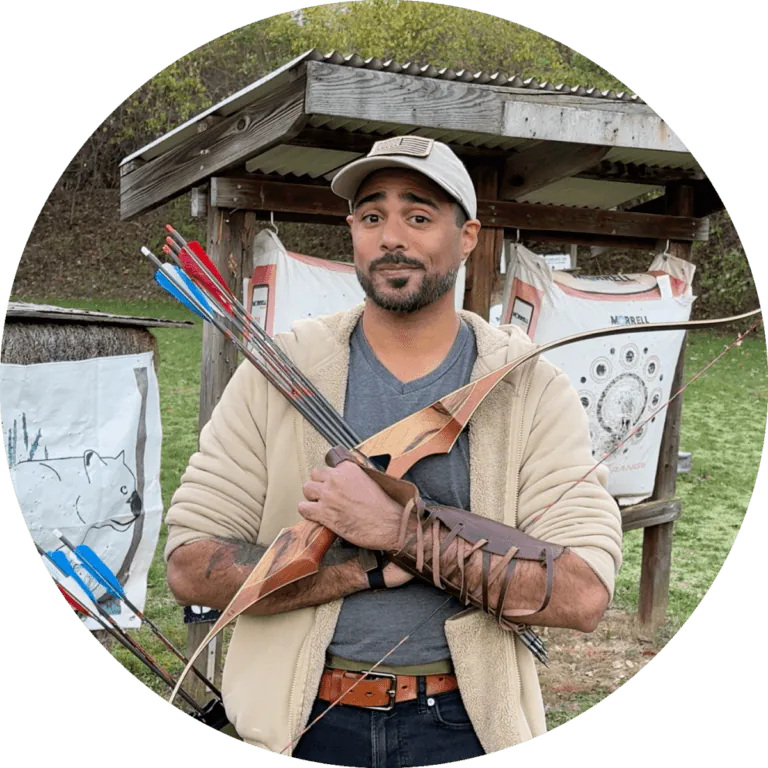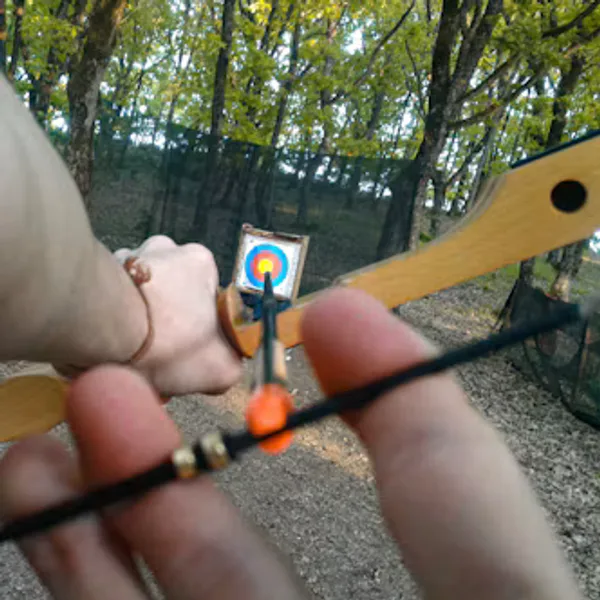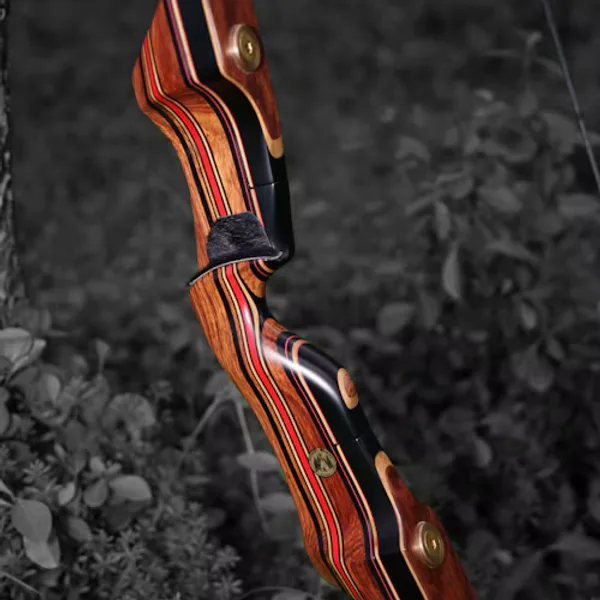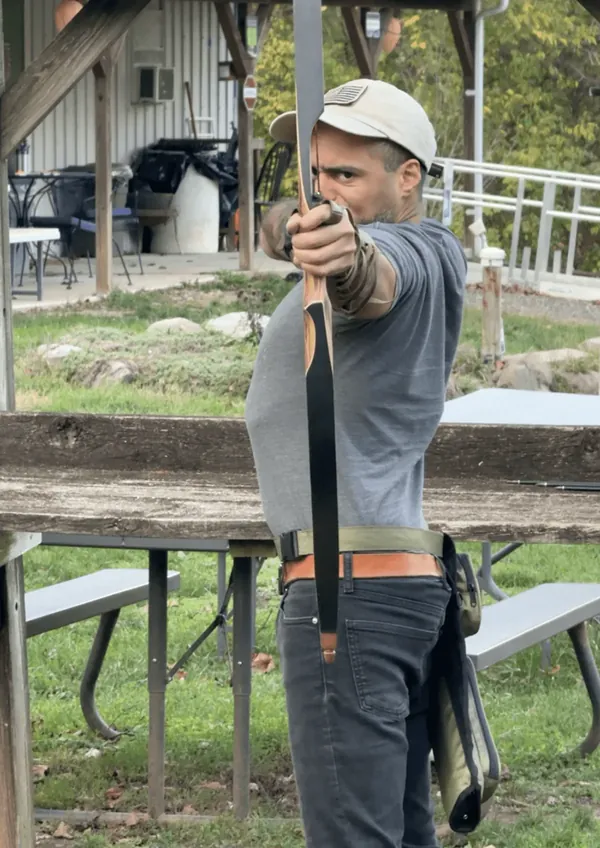
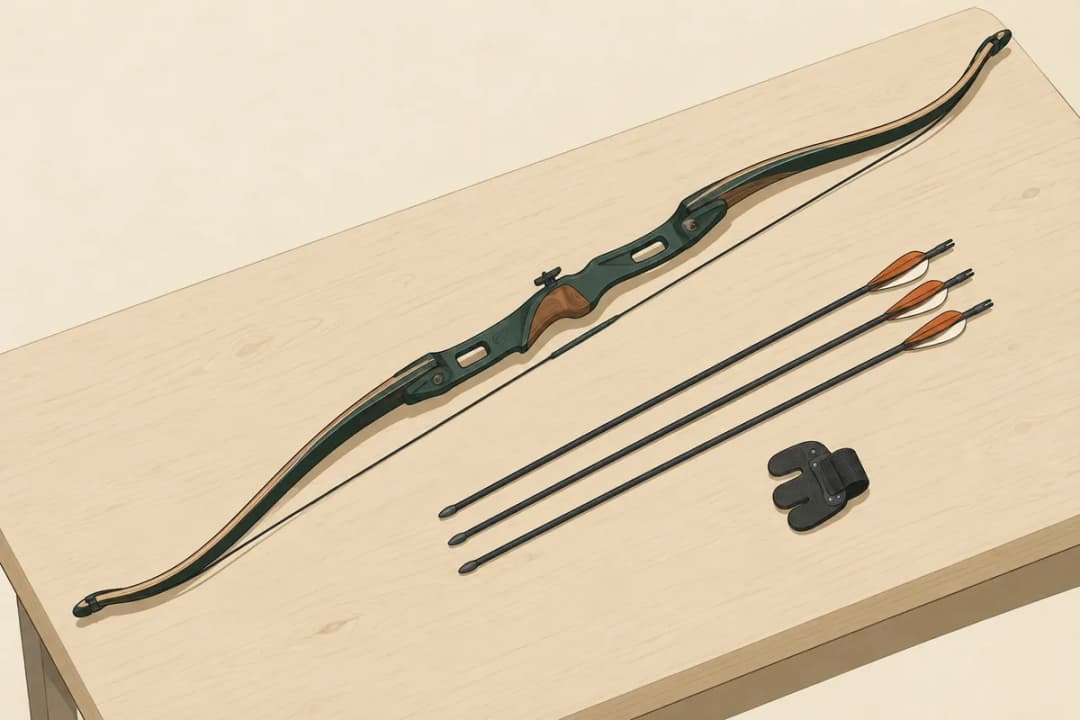


- Barebow means shooting a recurve or longbow with no sight and no stabilizers: you aim with the arrow, the string or your eye.
- Start barebow. A sight can come later, once your form puts arrows in the same place.
- There are 3 ways to aim a bare bow: instinctive, gap shooting and string walking.
- When the point is on the spot, hold it in the center of the gold, not under it: the center doesn’t move when the target face changes size.
- In competition, a barebow must pass through a 12.2 cm ring and carry nothing that helps you aim.
Myth: a beginner’s recurve needs a sight and a stabilizer before it can hit anything. Truth: shoot it bare first. 🙂
With nothing to adjust, every miss tells you something about your form, the form the recurve beginner guide walks you through. Add a sight later if you want one, and you’ll know exactly what it’s fixing.
How barebow works: a bow with nothing bolted on
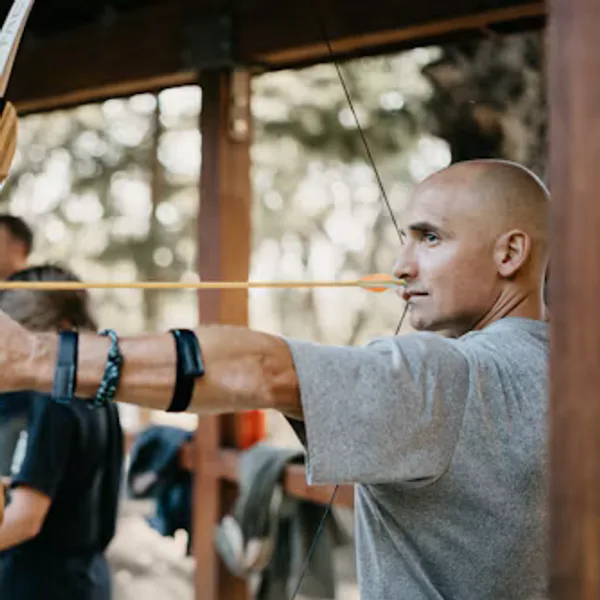
A barebow is a recurve or longbow shot with no sight, no clicker and no long stabilizers. You aim with what’s left: the arrow point, where your fingers sit on the string, or your eye alone.
At a backyard range, any bow without a sight is shot barebow. But in competition it’s a division with its own rules, and competitive barebow archers shoot a takedown recurve, often with weights fixed low on the riser to steady it.
- What stays: the riser, the limbs, the string and an arrow rest.
- What goes: the sight, the clicker and the long stabilizer rods.
- What you add: a finger tab or glove, and lots of arrows.
| On the bow | Barebow | Olympic recurve |
|---|---|---|
| Sight | None | A sight on the riser |
| Stabilizers | None (weights on the riser are allowed) | Long front rod and side rods |
| Clicker | None | Usually |
| Usual finger hook | Three fingers under the arrow | One finger above, two below |
| What you aim with | The arrow point, the string or instinct | The sight pin |
 From Jedain
// Free printable
Get the range log I actually use.
Seventeen printable pages: session log, score tracker, a 30-day drill challenge, a bow maintenance card, a first-season checklist and more. Join the monthly email and it lands right away.
Why you should start barebow and add a sight later
Start bare. A sight is a fine tool, but it’s one more thing to adjust, and a new archer who misses tends to move the sight instead of fixing the shot.
With nothing to adjust, every miss points at your form: your anchor, your bow arm, your release. That’s where your first months of practice belong, starting with a solid anchor point.
I shoot my recurve with no sight, and coming from firearms, learning to aim without one took real work:
Now I know we can have a reference point, but you know, it changes depending on distance and I just wasn't prepared for that coming from firearms.
That struggle is the training, not a flaw. A sight added later sharpens a good shot; it doesn’t create one. If you’re set on Olympic-style target archery, you’ll add a sight, clicker and stabilizers eventually, once your groups hold steady.
3 ways to aim a bare bow: instinctive, gap and string walking
With no sight you need a different reference. Barebow archers use one of three methods, and many mix them by distance.
Instinctive: you stare hard at the spot you want to hit and let repetition put the arrow there, without consciously lining anything up. It takes the most arrows to learn, and many instinctive shooters admit the blurry arrow in their side vision helps.
Gap shooting: you aim with the arrow point, holding it a set gap below the spot. The gap shrinks as you move back, until your point-on distance, where the point sits right on the spot.
String walking: you slide your fingers a set distance down the string below the nock. That tilts the arrow, so the point stays on the spot at every distance closer than point-on.
Learn in that order. Shoot by feel at short range until your anchor is automatic, use the arrow point as a gap reference once you move back, and leave string walking until last, because it only works with a shot that’s already the same every time.
Where to hold the arrow point: the center of the gold, not under it
Once the point sits on the target (at your point-on distance, or when string walking), you still have to decide where on the the spot it goes. Hold the tip of the arrow in the center of what you want to hit, not tucked under the gold.
Two-time Olympic silver medalist Jake Kaminski, who also shoots and coaches barebow, tried both and explains the problem with holding under the spot (the “6 o’clock hold”):
Definitely, in my experience, a con because these spot sizes change… So, I’ve found that as these spots shrink and expand, my impact point changes as well.
That’s the catch nobody tells you at a backyard target. Swap to a smaller face, or shoot a 3D animal with no spot at all, and a 6 o’clock hold moves your arrows even though nothing about your shot changed.
His answer is the one he says he’ll use from now on:
So, the other way to do it that I am using it now, and will continue to use it probably forever, is use the crest of your arrow in the center of the target as a reference point.
I agree. It’s the same habit instinctive shooting builds: look hard at the exact spot you want to hit, not the edge of it. It’s also the hold that carries over to the woods, where there’s no gold to sit under.
How to set up your recurve for barebow in 4 steps
Most beginner recurves are already barebows: they just need the right small parts. Don’t buy a barebow riser to start; set up the bow you have.
- Take off the extras: no sight, no clicker and no long stabilizer rods.
- Fit a rest and, if the riser takes one, a plunger: a stick-on arrow rest is fine for instinctive and gap shooting; string walkers wear them out faster and move to a sturdier rest.
- Get a finger tab or glove, and hook the string with three fingers under the arrow, which puts the arrow closer to your eye.
- Find your point-on distance: anchor at the corner of your mouth, put the point on the gold, and step back until the arrows hit where the point sits.
Barebow rules in competition: what the ring test allows
Barebow is its own division at tournaments. Under World Archery rules, the bow and everything on it must pass through a ring 12.2 cm across, and nothing on it may help you aim; marks in the sight window that could be used for aiming get taped over.
Weights are allowed as long as the bow still passes the ring, but stabilizers are not. That’s why barebow risers carry heavy, compact weights instead of long rods.
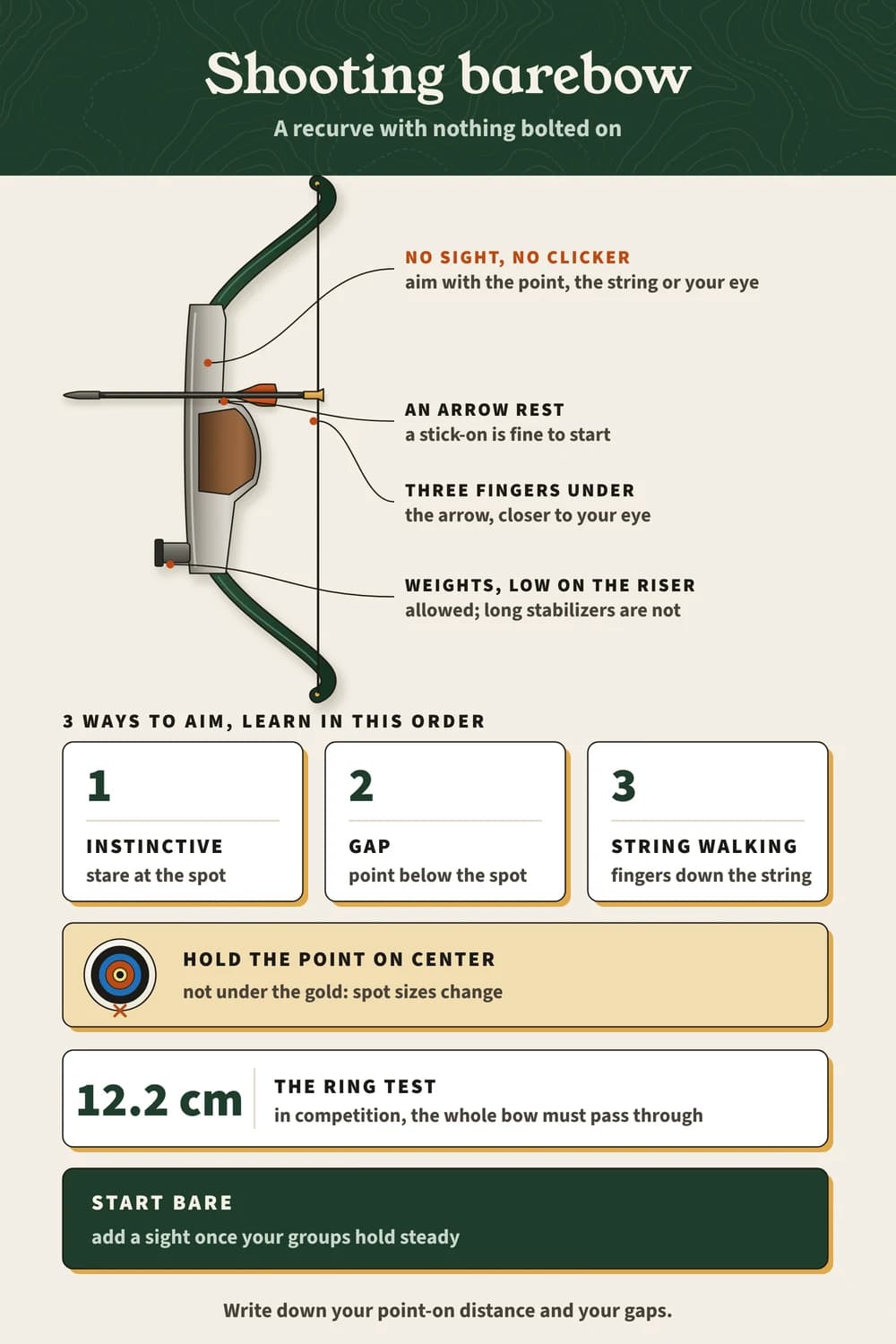
To keep the essentials straight, here’s barebow on a single page.
// FAQ
Frequently asked questions
Quick answers to the questions readers ask most.
What does barebow mean in archery?
Shooting a recurve or longbow with no sight, no clicker and no stabilizers. You aim with the arrow point, the string or instinct.
Is barebow good for beginners?
Yes, it’s the right way to start. With nothing to adjust, every miss points at your form, which is what you need to fix first.
Is barebow the same as instinctive shooting?
No. Instinctive shooting is one way to aim a bare bow; gap shooting and string walking are the other two.
Can you put weights on a barebow?
Yes. In World Archery competition, weights are fine as long as the bow passes through the 12.2 cm ring, but stabilizers are not allowed.
When should I add a sight?
When your groups are steady at your usual distance and you want target-style precision. Until then, shoot bare.
Final thoughts
Start bare, build the feel, and add gear only when you know what it fixes. A bare bow is the cheapest, most honest coach you’ll ever have.
Write your groups by distance in the free range log, and you’ll see your aim settle week by week.
Shooting bare makes small bow problems loud. If your arrows still wander, check the limbs next: bow tiller takes two measurements with a bow square.