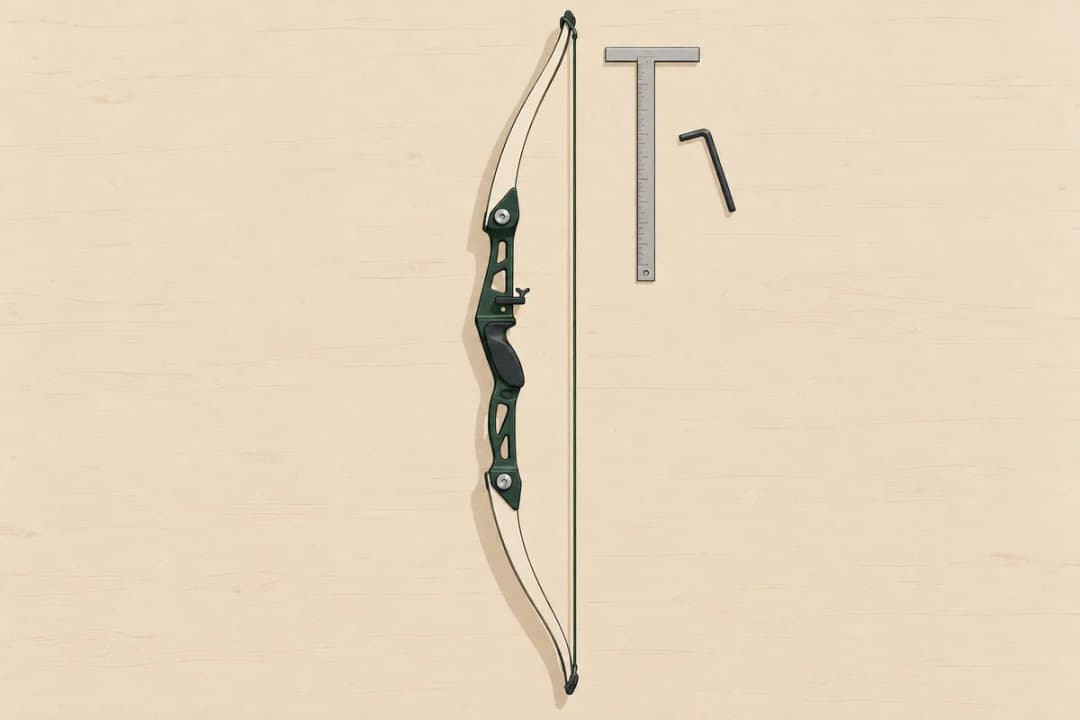


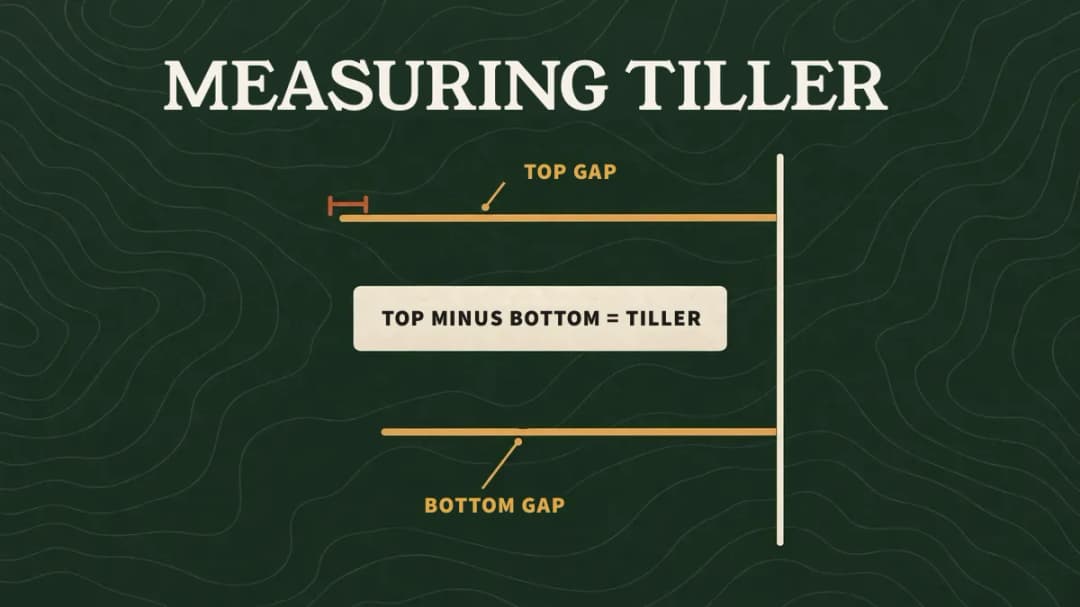
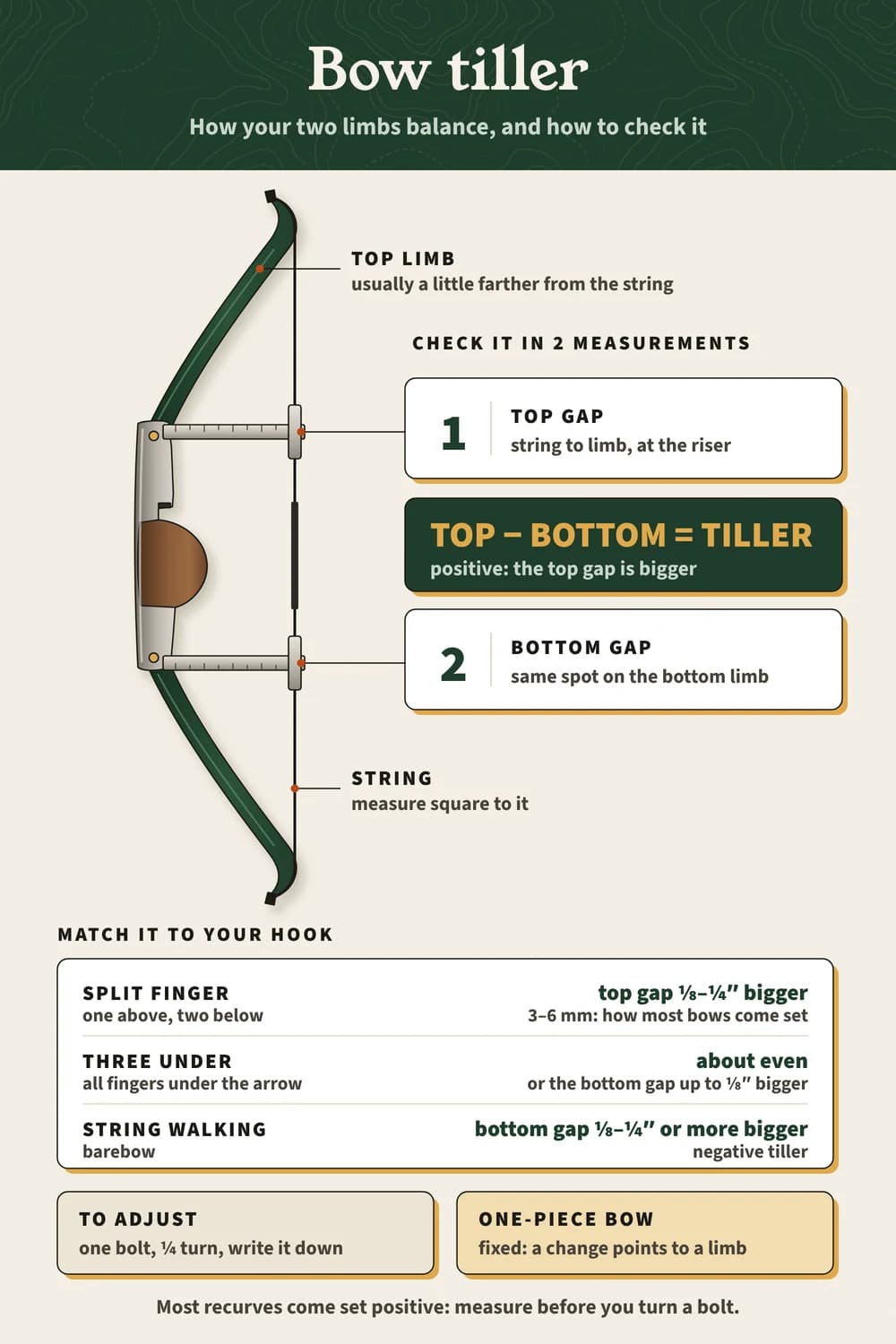
- Check tiller with a bow square in 2 measurements: top limb gap minus bottom limb gap.
- The right number depends on your hook: split finger runs about 1/8–1/4″ positive, three under about even, string walkers negative.
- Check it before you touch it. Most recurves come set with positive tiller, which suits the split-finger hook.
- Adjust one bolt at a time, a quarter turn, and write every change down.
- On a one-piece bow tiller is fixed, so a reading that changes points to a limb problem.
Put the hex key down. 😅 Before you touch your takedown’s limb bolts because you read they need “tillering” (the balance between top and bottom limb), measure the tiller first.
Use the same bow square you use for brace height. Most recurves come set with positive tiller, right for the split-finger hook most beginners learn, so you may find there’s nothing to adjust at all.
How tiller works: why your two limbs aren’t set the same
Your bow has two limbs and your hand doesn’t pull them evenly. Tiller is how you balance them: the distance from each limb to the string, compared top against bottom.
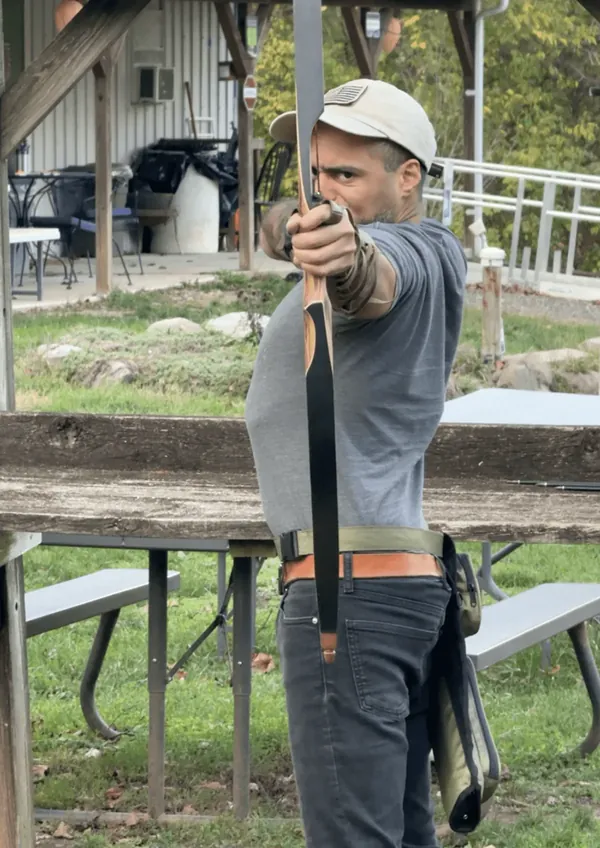
With the usual split-finger hook (one finger above the arrow, two below), you pull a little below the middle of the string. A slightly stronger bottom limb balances that, so most recurves are set with positive tiller: the top limb sits a little farther from the string.
Olympian Jake Kaminski, whose video is further down, puts the split-finger number plainly:
When shooting split finger or one above two below or Mediterranean draw, as some call it, you’ll need to run the bottom tiller about an eighth of an inch to a quarter of an inch shorter than the top.
That’s the setting most bows come with. If you shoot split finger, a reading in that range means there’s nothing to fix; go shoot.
How to check your tiller in 2 measurements
You need the bow strung and a bow square, the T-shaped ruler that clips onto the string. The whole check takes a minute (if that).
- Top limb: hold the square against the string and measure straight across, at a right angle to the string, to the belly of the limb right where it leaves the riser.
- Bottom limb: measure the same way at the bottom limb, at the matching spot.
- Do the math: top minus bottom is your tiller. A positive number means the top limb reads more.
Write the number down next to your brace height. Next time you check, you’re comparing against your own bow, not a chart.
The right tiller for your hook: split finger, three under or string walking
Change where your fingers sit on the string and the right tiller changes too. Match the tiller to the hook you actually shoot, not to a number from someone else’s bow.
 From Jedain
// Free printable
Get the range log I actually use.
Seventeen printable pages: session log, score tracker, a 30-day drill challenge, a bow maintenance card, a first-season checklist and more. Join the monthly email and it lands right away.
| Your hook | Typical tiller | What to do |
|---|---|---|
| Split finger (one above, two below) | Top about 1/8–1/4″ (3–6 mm) more than bottom | Nothing, if your reading is in this range |
| Three fingers under the arrow | About even, or the bottom up to 1/8″ more | Consider evening it out, a little at a time |
| String walking (barebow) | Bottom 1/8–1/4″ or more, more than top (negative) | Set it with your usual crawl in mind |
| Any hook, but different from your last check | Something moved | Find out why before you shoot |
Kaminski on three under, the hook many barebow and traditional archer’s use:
When shooting the bow with three fingers under the arrow and touching the nock when at full draw, you’re going to want to run your tiller even, zero split, or possibly an eighth of an inch bigger on the bottom.
This is the one case where I’d tell a beginner to adjust. If you shoot three under and your bow reads a quarter inch positive, it was set for a hook you don’t use, and evening it out should make full draw feel steadier.
How to adjust tiller with the limb bolts, safely
On a takedown, each limb bolt changes that limb’s strength. Tighten the top bolt and the top gap shrinks; loosen it and the top gap grows. The same goes for the bottom.
- Unlock the bolt: loosen the locking screw beside the limb bolt with a hex key, if your riser has one.
- Turn one bolt a quarter turn (clockwise tightens), unstringing the bow first for big changes.
- Re-lock, string and measure both gaps again.
- Write it down: which bolt, which way, how far, and how the bow felt.
Step 4 is the habit Kaminski swears by, and it’s the one people skip:
Anytime you make a change, make note on a notebook. That way you can track how the performance of your bow is and how it feels when at full draw.
I’d add one thing: change one thing per session. If you move tiller and brace height on the same day, you’ll never know which one helped.
If you’re changing draw weight instead, turn both bolts the same amount so the tiller stays put. Stay inside the number of turns the riser’s manual allows.
When tiller changes on its own: what it tells you
A number that drifts is a message. Find the cause before you shoot again, and start with the easy checks:
- Limb bolts: both still where you left them.
- Limb pockets: each limb seated fully and centered.
- String track: the string runs down the middle of both limbs when you draw.
- Storage: the bow hangs or lies flat, not leaning on its lower limb in a corner.
My own bow is a one-piece recurve, so there’s no bolt to turn at all. The maker set its tiller when the bow was built, so a changed reading points at the limbs themselves: take a twisted limb to a shop rather than trying to bend it back at home.
Here’s the whole tiller check on one page, to keep beside your bow square.
// FAQ
Frequently asked questions
Quick answers to the questions readers ask most.
What should my recurve’s tiller be?
For split finger, the top limb about 1/8–1/4 inch (3–6 mm) farther from the string than the bottom. Three under runs about even; string walkers run the bottom farther.
Which way do I turn the limb bolt to change tiller?
Tighten a bolt (clockwise) to make that limb stronger and shrink its gap; loosen it to grow the gap.
Does changing draw weight change tiller?
Only if you turn the two limb bolts by different amounts. Turn both the same and the tiller stays the same.
Can you adjust tiller on a one-piece bow?
No. The bowyer sets it when the bow is built, so a reading that changes means a limb needs a shop’s eye.
Do string walkers need different tiller?
Yes: most run negative tiller, with the bottom gap bigger, because a deep crawl loads the bottom limb more. The string walking guide explains the crawl.
Final thoughts
Tiller is a number to match to your hook, not a knob to play with. Measure it, compare it with your hook, and change one bolt at a time only when the two don’t agree.
Keep your tiller and brace height in the free range log, and a problem shows up as a changed number long before it shows up in your groups.
With tiller matched to your hook, you’re set up for the purest way to shoot. Barebow archery shows three ways to aim without a sight.