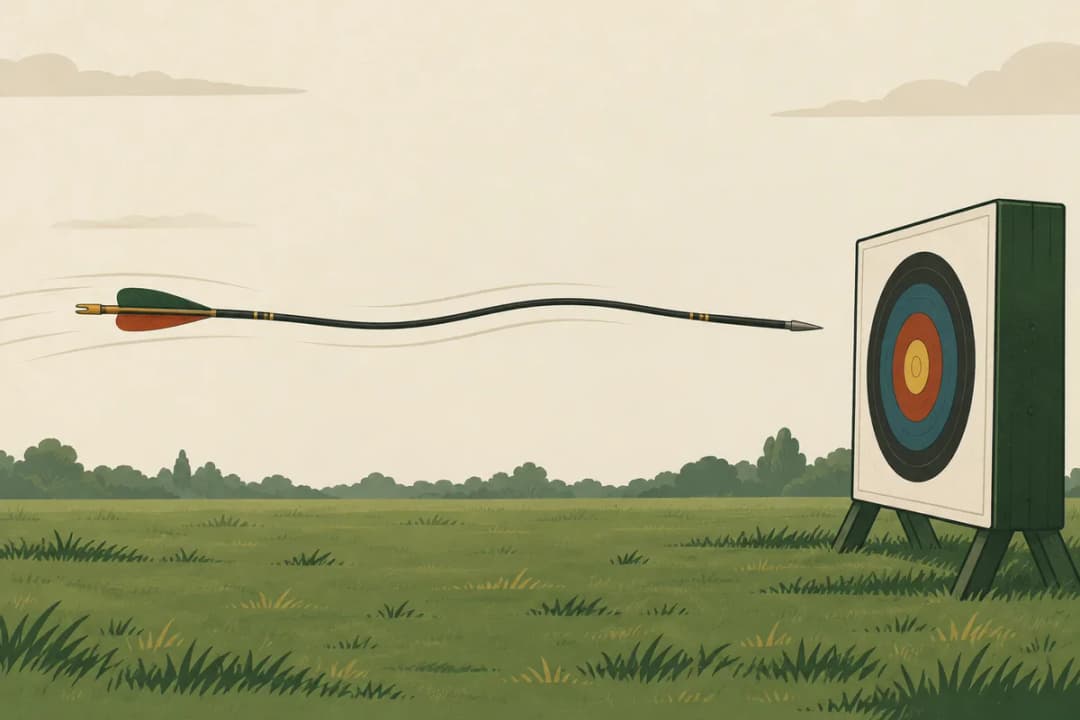


- The archer’s paradox: an arrow that points slightly to the side at full draw still flies straight to the target.
- The arrow gets there by bending around the riser, and spine decides whether it bends the right amount.
- For a right-handed archer, arrows that are too stiff land left and too weak land right, in a steady pattern.
- You don’t aim off for the paradox. You match the arrow: spine chart first, then point weight and length.
- Skip the arrows bundled with your bow; they’re the most common reason the bend works against you.
Same aim, same release, and your arrows still land left, then right, like they can’t make up their minds. 😤 A forum blamed “the archer’s paradox”, and it’s half right.
The paradox is real, but it isn’t the culprit: your arrows are bending the wrong amount for your bow. The fix is the right spine, not a new rest or a different aim, and the arrow spine guide shows how to pick it.
How the archer’s paradox works: aiming beside the arrow and still hitting
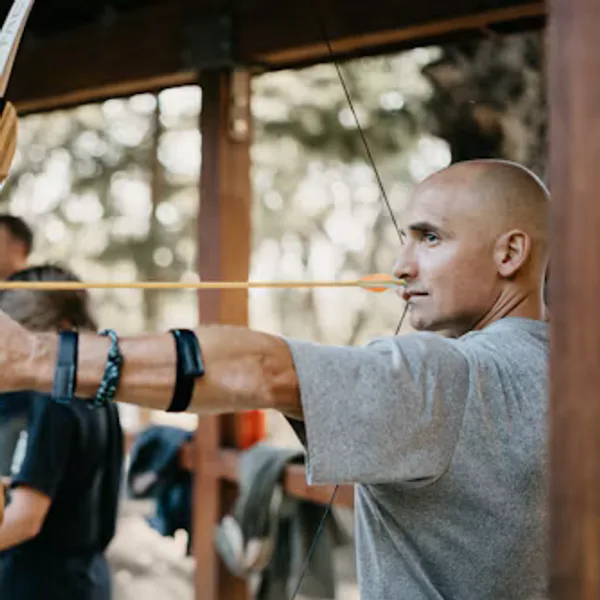
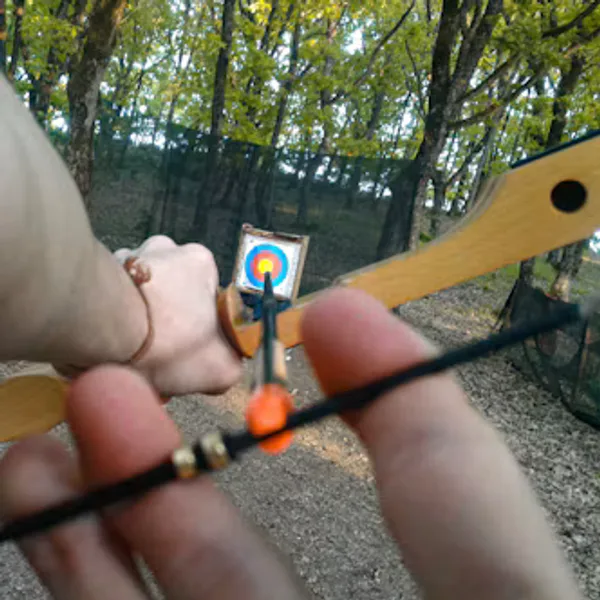
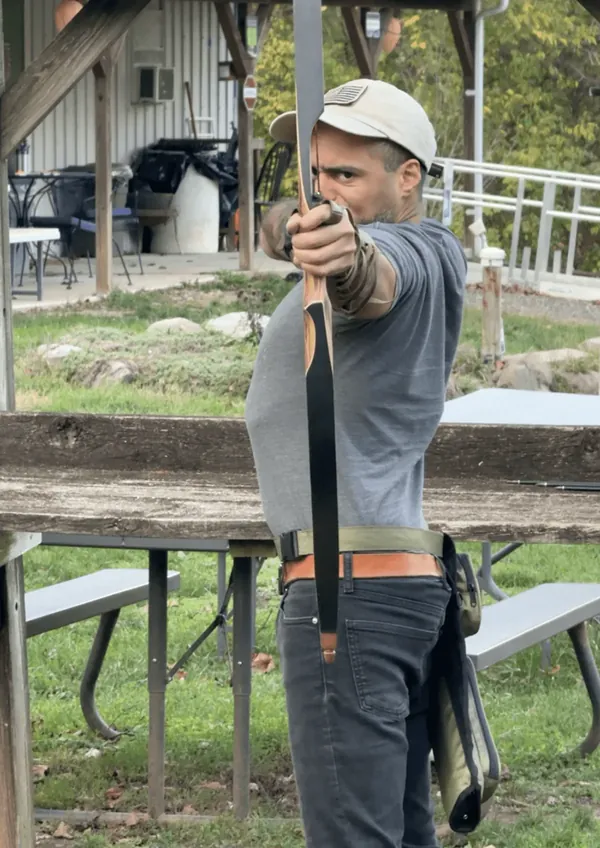
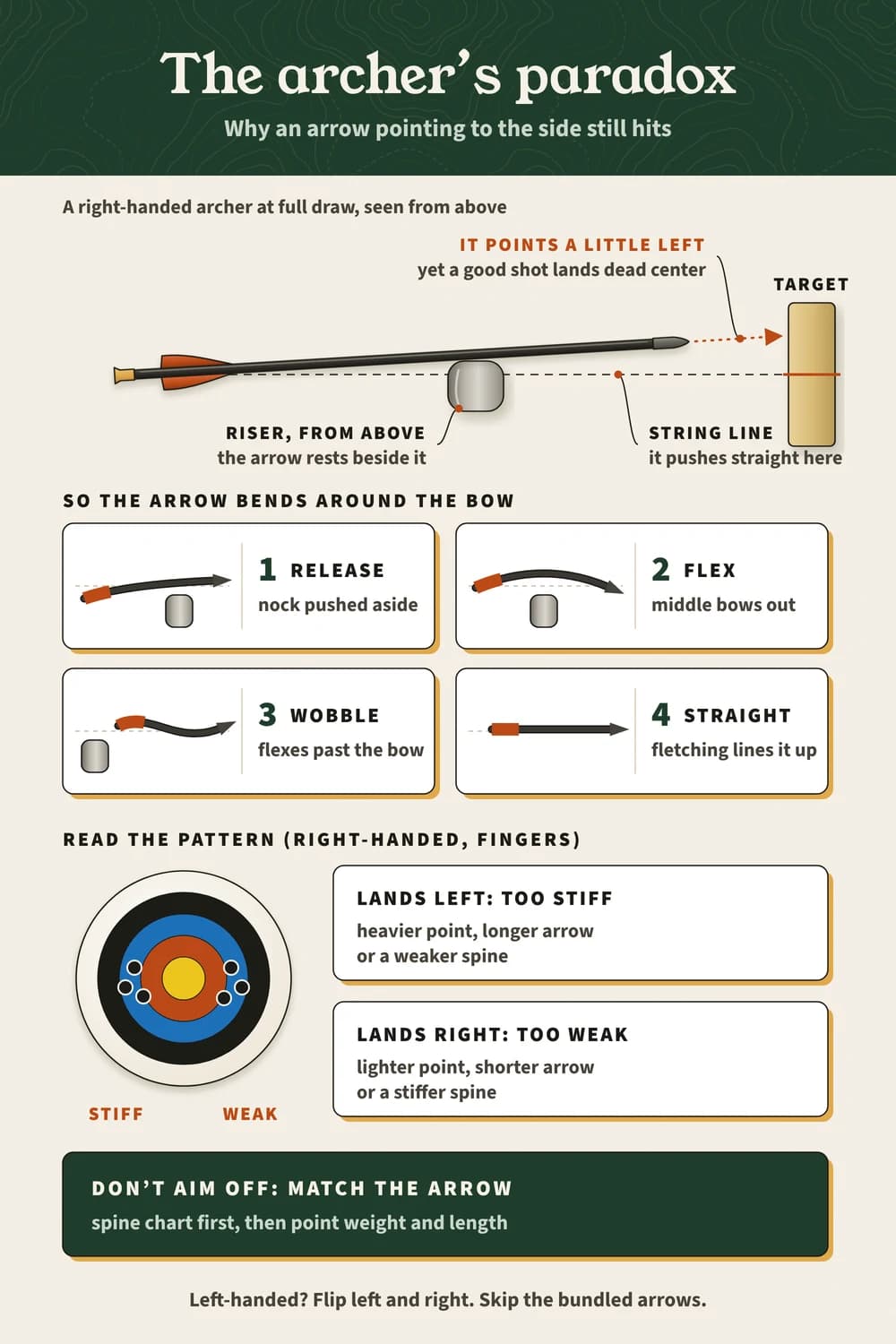
On a traditional recurve or longbow the arrow rests beside the riser, not through the middle of it. At full draw it points slightly to the side of the target (to the left, for a right-handed archer), yet a good shot lands dead center.
The string drives forward in line with the middle of the bow, not along the arrow. So the arrow has to bend around the riser to follow the string, and high-speed photography in the 1930s showed it doing exactly that.
- The release: the string slips off your fingertips and moves slightly sideways, pushing the nock end of the arrow off line.
- The flex: the arrow bends, its middle bowing away from the riser as it slips past.
- The wobble: once clear of the bow, the arrow keeps flexing back and forth for a short way.
- Straight flight: the fletching drags the tail into line, and the arrow settles onto a straight path to the target.
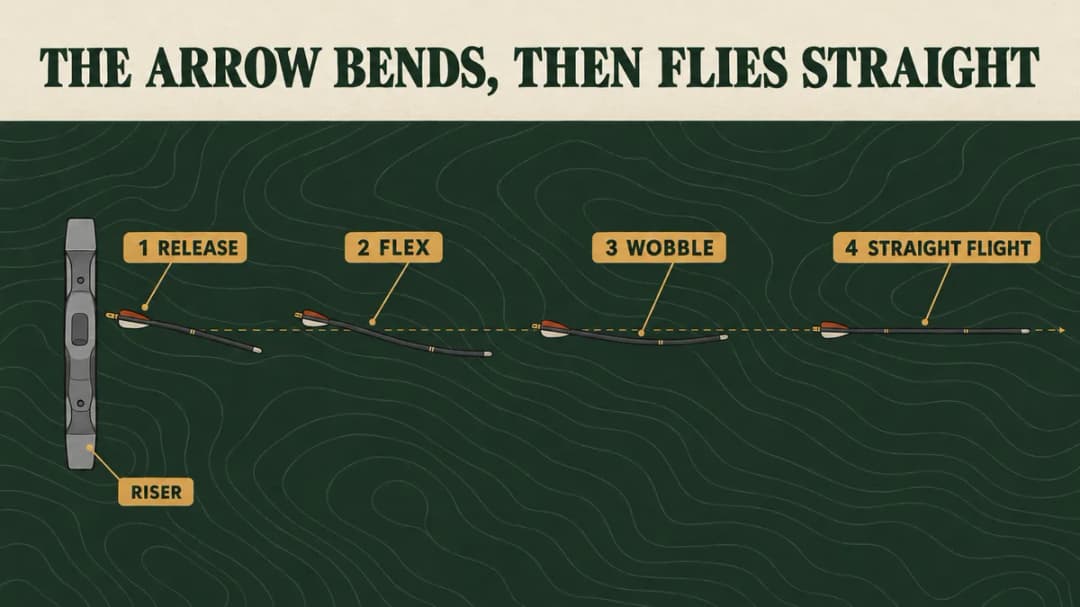
The bend isn’t a flaw; it’s how the arrow gets past the bow. The only question is whether your arrow bends the right amount.
 From Jedain
// Free printable
Get the range log I actually use.
Seventeen printable pages: session log, score tracker, a 30-day drill challenge, a bow maintenance card, a first-season checklist and more. Join the monthly email and it lands right away.
Why spine decides whether the paradox helps or hurts
Spine is how stiff the arrow is. A matched arrow bends just enough to clear the riser and recover; a mismatched one either fights its way past the bow or slaps it on the way out.
NUSensei, a long-running archery coaching channel, explains why spine is the whole game here:
The reason why spine rating is so important in the context of archer’s paradox is that the shaft needs to be flexible enough to clear the bow on release. Again, the arrow must get around the bow. If it’s not soft enough, it will hit the bow on the way out… too soft and it might still hit the bow on the way out, therefore causing clearance problems and affecting the accuracy of the bow.
That’s the part most beginners miss: too weak is as bad as too stiff. A “stronger” arrow isn’t a safer choice, its just wrong in the other direction.
3 signs your arrows are fighting the paradox
The target tells you when the spine is off as long as you read the pattern rather than single shots. A steady lean to one side points at spine; scattered misses point at form.
| What you see (right-handed, shooting with fingers) | Likely cause | Fix |
|---|---|---|
| Arrows, bare shafts especially, land left in a steady pattern | Spine too stiff | A heavier point, a longer arrow or a weaker spine |
| Arrows land right in a steady pattern | Spine too weak | A lighter point, a shorter arrow or a stiffer spine |
| Arrows fishtail and hit the target crooked | Spine far off for your bow | Arrows picked from the maker’s spine chart |
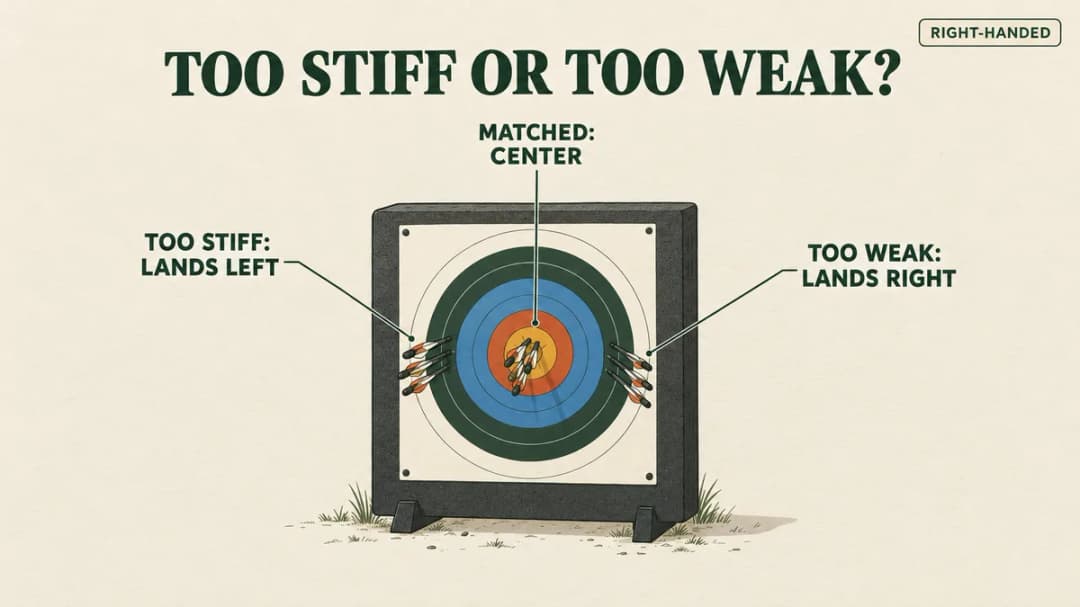
Left-handed? Flip the left and right. Point weight and arrow length change spine too: a heavier point or a longer arrow makes the same shaft act weaker (more on that in the arrow grain guide).
How to check your arrows against the paradox in 5 steps
You don’t need a shop to see whether your arrows suit your bow. Shoot a couple of arrows with no fletching (bare shafts) next to your fletched ones: without vanes to straighten them out, the bare shafts show the spine problem plainly.
- Pick your arrows from the maker’s spine chart for your real draw weight and arrow length (the arrow spine finder does it for you).
- Set up two bare shafts: the same shafts and points as your arrows, just with the fletching stripped or left off.
- Shoot three fletched arrows, then the two bare shafts, at the same spot from 10 yards, into a big target; step back to 15 once they group.
- Read where the bare shafts land against the fletched group: left means stiff, right means weak (right-handed).
- Change one thing at a time: fix high or low first (that’s your nocking point), then point weight, then arrow length, and only then a different spine.
Why matched spine beats any gadget, starting with the bundled arrows
Matched spine matters more than any gadget you can bolt on. A rest, a plunger or a stabilizer can fine-tune an arrow that already suits your bow, but none of them rescues an arrow that’s far off.
The arrows that came with my first bow are the proof. You could see them flying left and right as they left the bow, and the reason was plain:
The really bad thing about it was the terrible, terrible arrows that came with it. They were way too long for one thing and they're extremely flimsy, terrible spine.
After people at the range told me how bad they were, I switched to real arrows and never went back. Skip the arrows bundled with your bow, and buy one set matched to your draw weight and arrow length.
NUSensei puts the decision in the same place, and takes the aiming question off the table:
The archer’s paradox isn’t really a problem. It doesn’t have to be compensated for… the arrow does fly straight, so as long as you point the arrow in the right direction… the thing which an archer must consider is the choice of spine, which, if it’s not matched correctly, results in arrow drift in one way or the other.
I like this because it stops you from inventing aim tricks. Aim at the middle, and let the arrow choice do the correcting: if you’re holding off to one side to hit, your arrows are the thing to change.
Center-shot bows and compounds: less paradox, still flex
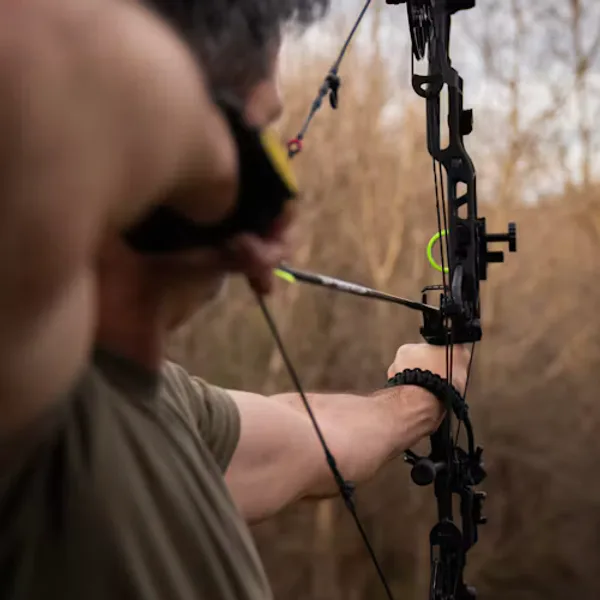
Most modern risers are cut past the center line, so the arrow can sit almost in line with the string. On a center-shot recurve or a compound, the arrow points nearly straight at the target, and the classic paradox mostly disappears.
The arrow still bends, though, and NUSensei says why:
The flex will still happen because with the way we release the strings with our fingers there will be a natural sideways motion as we release, as we uncurl fingers.
That’s why a clean release and matched spine matter on every bow you shoot with fingers. A compound shot with a release aid flexes mostly up and down instead, which is why compound arrows get matched on the maker’s chart too.
If you only remember one picture of the paradox, make it this one: what the arrow does and what your target is telling you.
// FAQ
Frequently asked questions
Quick answers to the questions readers ask most.
What is the archer’s paradox?
An arrow that points slightly to the side at full draw still flies straight to the target, because it bends around the riser as it leaves the bow and straightens out in flight.
Why does my arrow fishtail?
Usually its spine doesn’t suit your bow, draw weight or arrow length. Match the arrows on the maker’s chart first, then check your form.
Does a stiffer arrow fly straighter?
No. An arrow that’s too stiff doesn’t bend enough to clear the riser, and a right-handed archer’s arrows land left.
Why do my arrows hit left even with good form?
A steady pattern to the left (for a right-handed archer) points at arrows that are too stiff for your bow. Try a heavier point or a weaker spine.
Do I need to aim differently because of the archer’s paradox?
No. Aim at the target and let matched arrows take care of the bend.
Final thoughts
The archer’s paradox isn’t something to fight; it’s something to match. Get the spine right and the bend takes care of itself.
Write down which arrows you shoot and where they group in the free range log, and a spine problem shows up as a pattern you can fix.
The paradox is spine at work, so the next step is choosing the number. How to pick the right arrow spine shows the chart and the bare-shaft check.